
In the past year, the world has faced numerous challenges, with the ongoing Russia-Ukraine war, geopolitical unrest, increased pressure on the supply chain, and inflation driving up operational costs, all impacting market demand. The re-election of former U.S. President Donald Trump has further introduced new uncertainties to the global economy and climate policies. Trade protection policies are triggering a new round of trade wars, impacting the global supply chain; adjustments in energy policy may hinder the progress of carbon reduction, and businesses need to carefully weigh their strategies in energy. Meanwhile, according to the Global Risk Report 2025, extreme weather is no longer just an environmental topic but has become a critical factor directly affecting economic development. This is no longer a future risk, but a current reality. Therefore, for a company to maintain longterm competitiveness, sustainability must be incorporated into core decisions.
Despite the uncertainties in the external environment, Phihong continues to move forward steadily. In 2024, our revenue decreased by 11.6% compared to the previous year, but the gross margin still maintained slight growth. In terms of our main business, we continue to promote more efficient and environmentally friendly power technologies. In power supply products, we focus on high energy efficiency, high power density, and low-carbon design. Among these our wide-bandgap semiconductor GaN (Gallium Nitride) power supplies being the most widely recognized in the market. This technology not only significantly reduces product volume and weight, but also lowers the carbon footprint of materials. At the same time, it reduces energy consumption during transportation and use, thereby contributing to carbon emissions reduction. With the rapid growth of the electric vehicle market, the demand for charging stations is also continuously increasing. We are actively developing highperformance, high-power charging technologies and collaborating with government and corporate partners to jointly promote the construction of charging infrastructure, accelerating business transformation and growth.
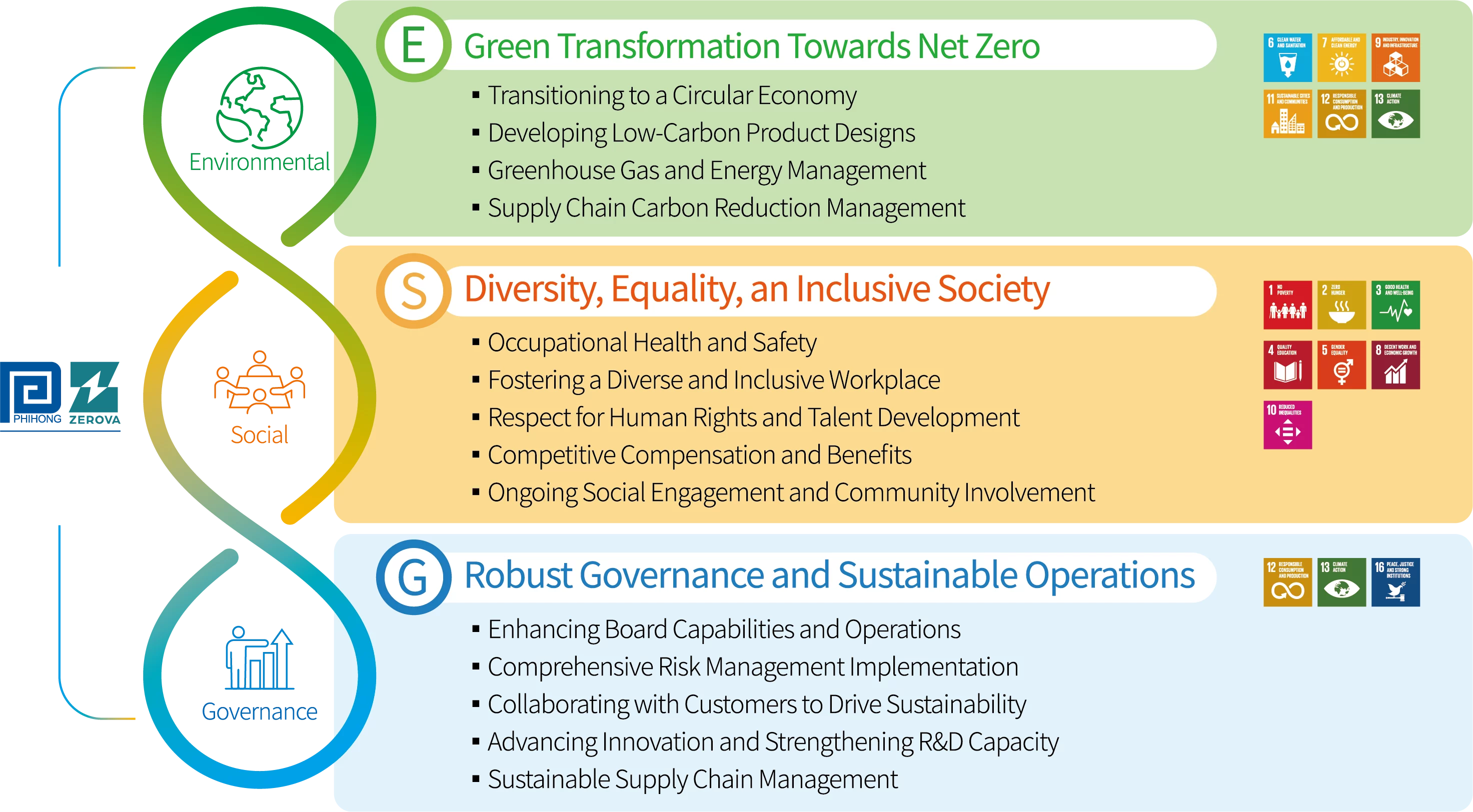
In terms of our sustainability commitments and actions, we are dedicated to promoting key actions across the three major areas of sustainable development:
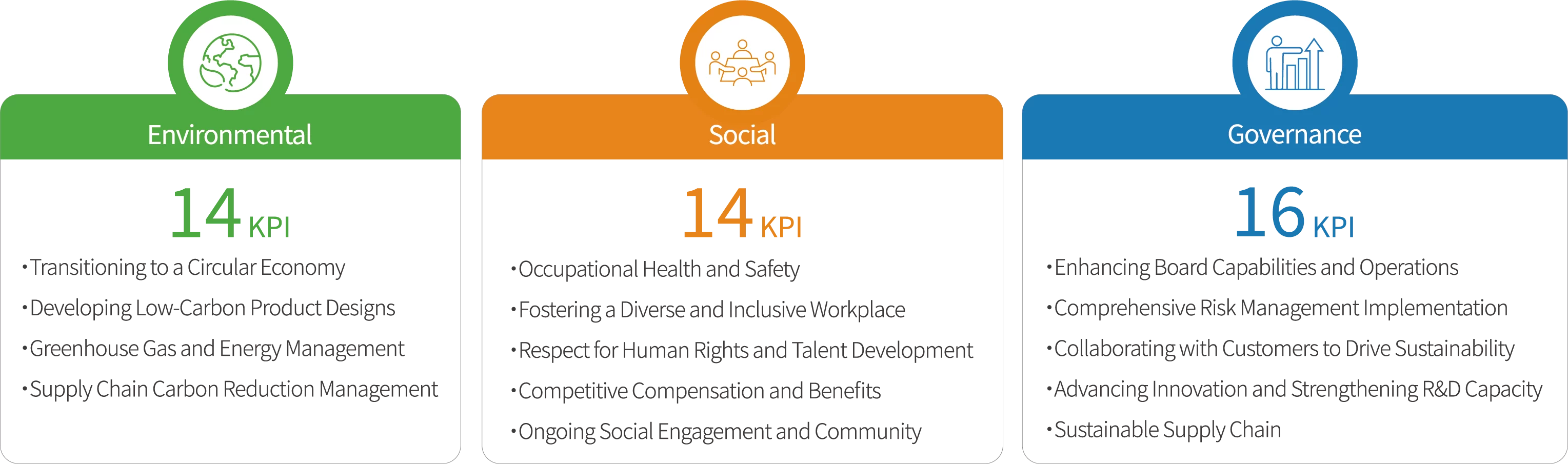
Environmental (E): Promoting circular economy and low-carbon design, strengthening management of carbon emissions and energy, and working collaboratively with the supply chain to reduce carbon emissions.Social (S): Ensuring workplace safety, promoting diversity and inclusion, valuing human rights and talent development, providing competitive compensation and benefits, and continuously investing in public welfare.Corporate Governance (G): Enhancing the effectiveness of the Board of Directors, implementing risk management, advancing research and innovation, and strengthening the sustainable supply chain. Furthermore, in 2025, Phihong officially introduced the Task Force on Nature-related Financial Disclosures (TNFD) framework, incorporating nature-related topics into the TCFD report for the first time, demonstrating its commitment and action toward sustainable development.
Phihong demonstrates outstanding performance in sustainable development! In Q1 2024, we successfully passed the SBTi carbon reduction target validation, and in Q4, received the EcoVadis Gold Medal, the Taiwan Corporate Sustainability Report Gold Level, and the RBA VAP Silver Rating. In addition, our CDP Climate Change evaluation received a B rating, and we implemented ISO 50001 Energy Management standard, ISO 14067 Carbon Footprint Inventory, and ISO 27001 Information Security Management standard, all of which were verified by third parties. Notably, Phihong has won the Golden Award for Happy Enterprises for five consecutive years, demonstrating our full commitment to sustainable development.
Looking ahead, while the global economic and political environment remains challenging and market uncertainty continues to rise, our commitment to sustainable development remains steadfast. We will further deepen our ESG strategy, establish specific performance indicators, strengthen internal governance structures, and advance data-driven decision-making to ensure the Company’s development remains aligned with global trends. In fact, a corporation’s influence reaches far beyond its own operations, extending to the entire supply chain, investors, and consumers. Therefore, we are committed to engaging all stakeholders through open and transparent information disclosure, working together to drive meaningful change.
Finally, we sincerely thank all employees, partners, and investors. Your efforts and support empower us to move forward steadily, even in the face of challenges. We will continue to move toward a more sustainable, inclusive, and resilient future!
For a company to maintain long-term competitiveness, sustainability must be incorporated into core decisions.
Group General Manager



The year 2024 marks a significant milestone for Phihong on our journey toward sustainable transformation. We fully recognize that as the global supply chain undergoes structural shifts and challenges from climate change, businesses must not only pursue steady growth but also embrace their responsibilities in environmental stewardship, social progress, and sound governance. This year, while maintaining stable operations, we have continued to deepen our ESG strategy, demonstrating our firm commitment to sustainable development.
In terms of operational performance, although Phihong encountered certain revenue challenges in 2024, we continued to demonstrate our competitive edge in the global market and our strength in continuous innovation. By enhancing R&D capabilities, optimizing supply chain management, and advancing digital transformation, we effectively responded to industry changes and market fluctuations, reinforcing the foundation of our core business while actively expanding into high-growth areas such as new energy and smart applications. Through strengthening research and development capabilities, optimizing supply chain management, and promoting digital transformation, we have effectively navigated industry changes and fluctuations in market demand. These efforts have reinforced the foundation of our core business while actively positioning ourselves to seize growth opportunities in areas such as new energy and smart applications.
In terms of the three ESG aspects, we have achieved a number of concrete accomplishments that are recognized internationally and carry strong credibility:
Environmental
To respond to the global carbon reduction trend and climate risk management, we successfully obtained validation of our science-based carbon reduction targets (SBTi), confirming that our decarbonization pathway aligns with the global temperature control objectives set out in the Paris Agreement. At the same time, we received a B rating for the CDP Climate Change Questionnaire for the first time, demonstrating our maturity in carbon management transparency and risk response mechanisms. In addition, by obtaining ISO 50001 Energy Management System certification, we have further strengthened our energy efficiency and operational decarbonization performance.
Social
We place great importance on employees’ rights, labor conditions, and workplace safety, and have continuously maintained Silver-level certification from the Responsible Business Alliance (RBA),demonstrating our tangible commitment to human rights protection and social responsibility. Meanwhile, we continue to invest in talent cultivation, gender equality, and local public welfare, building an inclusive and resilient corporate culture.
Governance
Information security and risk management are core priorities in the digital age. This year, we obtained ISO 27001 certification for our Information Security Management System, further strengthening internal controls and security safeguards to protect the data of our customers and partners. In addition, we have continued to enhance the effectiveness of the Board of Directors and the overall corporate governance framework,further improving transparency and strengthening stakeholder trust.
Looking ahead, Phihong will continue to uphold “innovation-driven development and responsible practices” as our core principles. We will deepen our ESG strategy, actively promote net-zero initiatives,strengthen sustainable supply chain management, and work closely with global partners to address climate and social challenges together. We believe that only by embedding the spirit of sustainability into corporate culture and daily operations can we create true long-term value.
Only by internalizing the sustainable spirit into corporate culture and daily operations can a company create truly lasting value.
Chief Sustainability Officer