Environmental Protection
Phihong deeply recognizes the importance of Earth's resources and sustainable development. The company actively promotes environmental management systems and aligns with global carbon reduction trends. Using 2021 as the baseline year, Phihong aims to achieve a 42% reduction in carbon emissions (Scope 1+2) by 2030, working toward net-zero emissions by 2050.
Energy and Greenhouse Gas Management
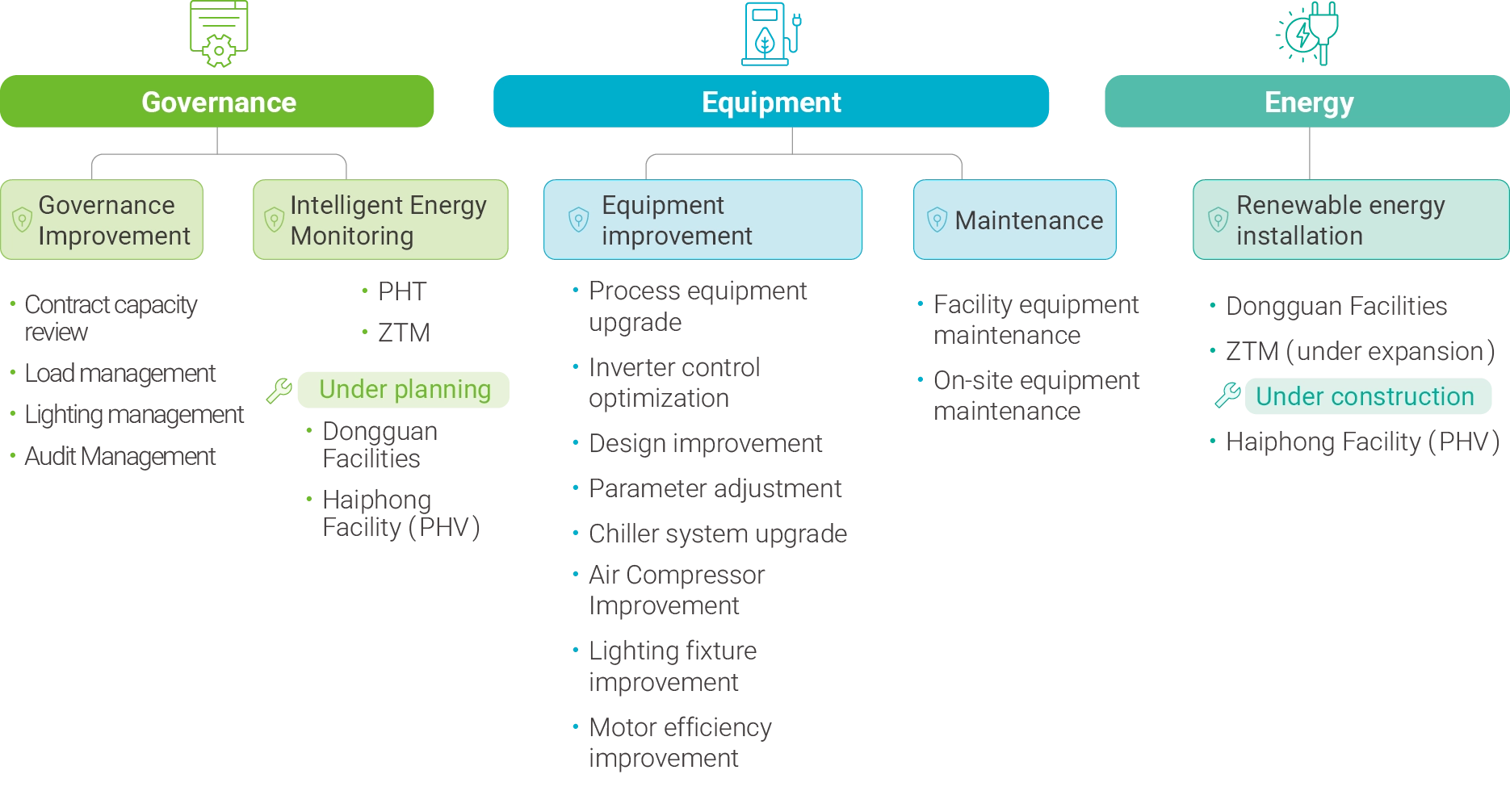
Phihong has been deeply involved in Energy Management for many years, and implemented the ISO 50001 Energy Management System in 2024, obtaining third-party certification. The company actively promotes energy-saving concepts, provides comprehensive resources, and continuously establishes Energy Monitoring systems; strictly implements new equipment energy review and Change Management, and conducts regular and Irregular checks on Energy Consumption status. For any improvement opportunities, an assessment report and future plans are required, driven by actions for continuous optimization of energy.
To comprehensively implement energy management and sustainable development targets, the Sustainable Development Office has organized the “Group Low Carbon Technology Investment and Energy-Saving Technology Exchange Event” starting since 2025. Professional technical personnel from various plants are invited to participate in the Energy Management Annual Meeting, where they will share successful case studies across regions and plants to accelerate the introduction and spread of energy-saving and carbon-reduction technologies. Related technologies include high-performance process equipment, smart energy management, renewable energy applications, and process emission reduction, continuously enhancing the Group’s overall energy efficiency and carbon footprint performance. This year’s conference focused on the current state and future planning of monitoring technologies, laying the foundation for the company’s Energy Management; a total of 19 energy-saving solutions and technologies were shared, including innovative system methods, pragmatic alternatives, and improvement plans. These measures demonstrate that significant energy savings and carbon reduction can be achieved without the need for high investments.
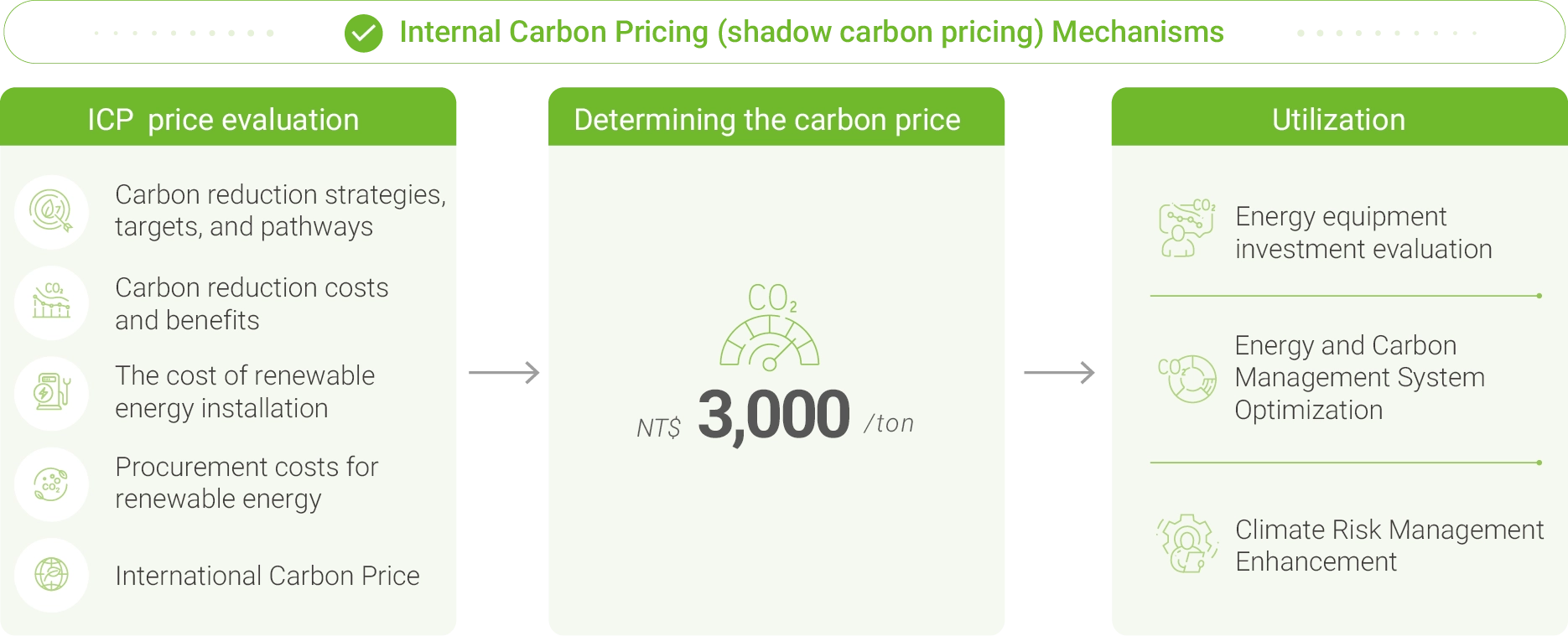
To enhance the sensitivity of operational decisions to climate risks and strengthen carbon reduction performance, Phihong has implemented internal carbon pricing ( ICP) starting in October 2025. This will internalize carbon costs, integrate them into operational and investment decisions, strengthen energy management and investment efficiency in equipment, and align with international net-zero trends.
In setting the carbon price, taking into account the global carbon market, national carbon fee systems, supply chain net-zero requirements, and the company’s decarbonization pathway, a shadow carbon price of NT$3,000 per ton is established. This serves as the basis for Energy Management and investment evaluations, reflecting the anticipated future carbon costs. ICP has been integrated into the equipment investment and change processes, synchronously considering economic benefits, energy efficiency, carbon impact, and full life cycle costs in decision-making. It is reviewed and adjusted annually to ensure its scientific validity and competitiveness.
Investment Decision Enhancement :
Incorporate shadow carbon pricing into feasibility assessments to increase incentives for investing in low-carbon equipment.
Energy and Carbon Management Optimization :
Enhance data quality and audit mechanisms to ensure ICP is transparent and credible.
Climate Risk Management Enhancement :
By internalizing carbon pricing, increase the sensitivity of decisions to rising carbon costs and reduce transition risks.
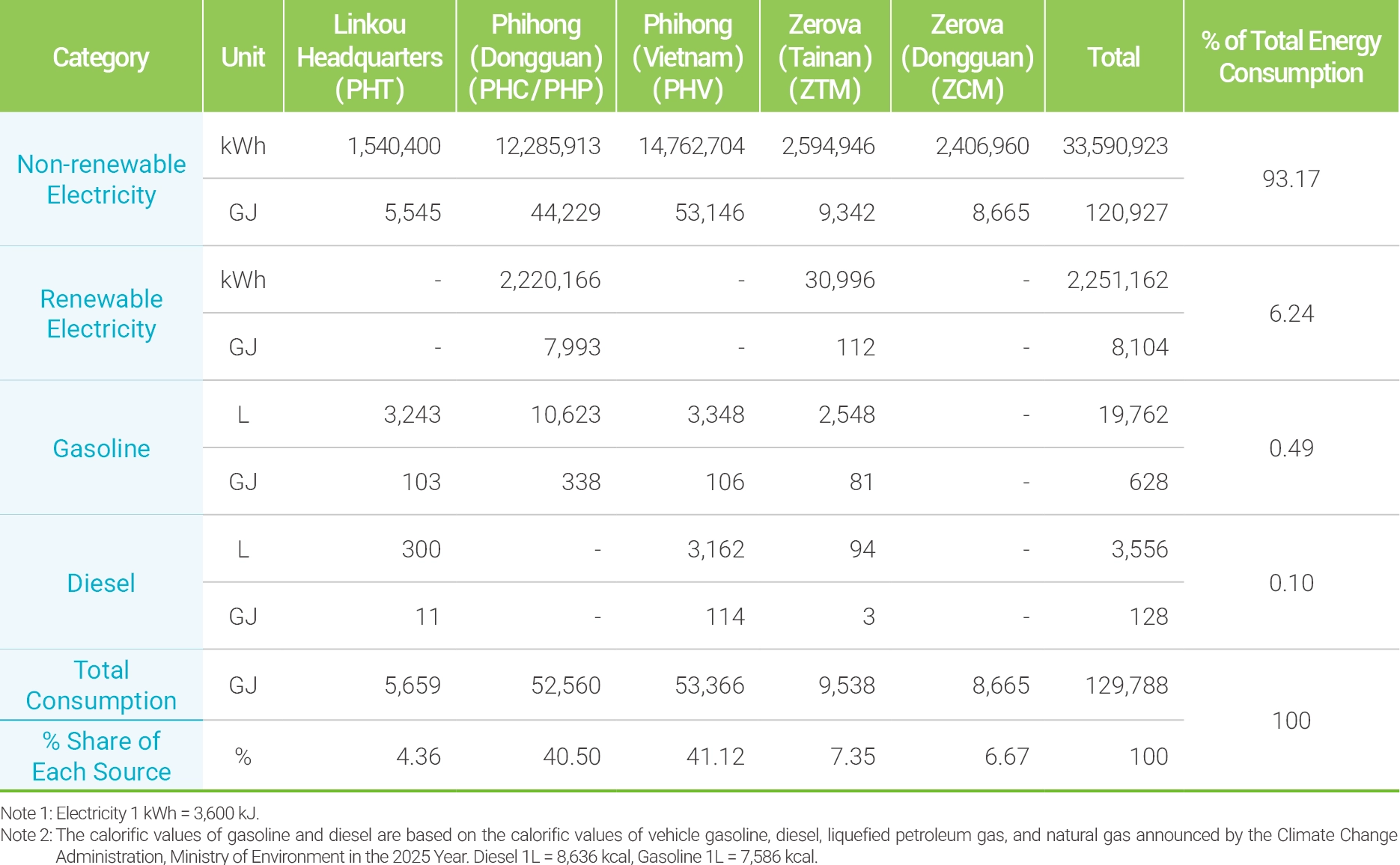
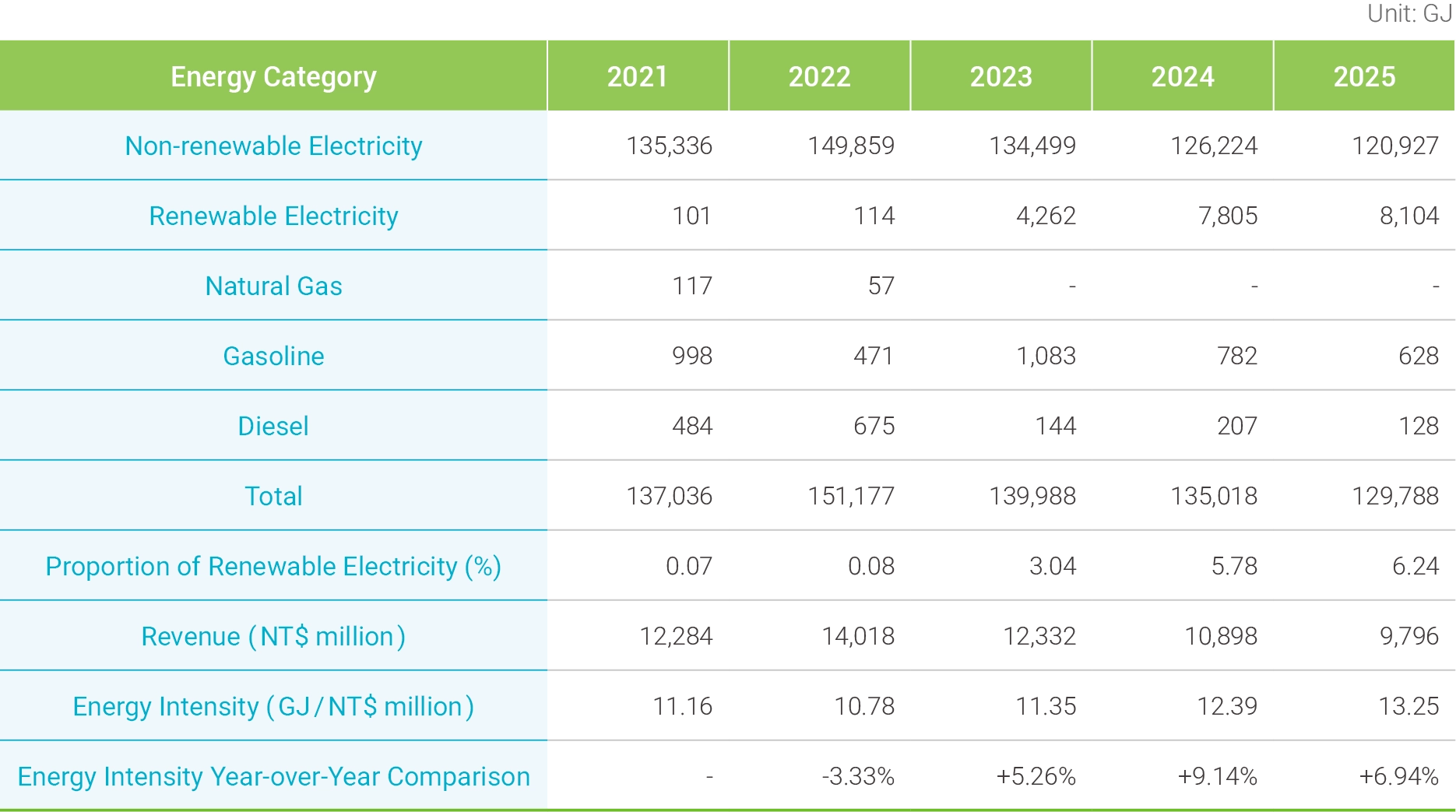
To achieve its carbon reduction targets, starting from 2023, Phihong (Dongguan) has promoted an energy transition by gradually shifting from natural gas to electricity use, optimizing the overall energy structure,and has reached an operational model of 100% electricity supply. According to the 2025 Energy Consumption statistics, electricity was the main Energy Source, accounting for 99.41% of total energy usage, with general electricity comprising 93.17% and renewable electricity making up 6.24%. In terms of renewable energy adoption, the proportion of green electricity usage continues to rise, with a significant increase from 0.07% in 2021 to 6.24% in 2025, demonstrating the company’s effectiveness in actively promoting energy transition and low-carbon operations.
To actively implement GHG Management and enhance Climate Resilience, Phihong has adopted the “Rui Carbon Cloud” online management platform to improve the quality and transparency of the group’s emission data. In response to the IFRS S1 and S2 standards’ requirements for climate risk disclosure, Phihong successfully passed the Science-Based Target initiative (SBTi ) audit in 2024. Additionally, ISO 14064-1 verification for the Linkou Headquarters and major global plants has been established as an annual routine process. In line with the FSC’s timeline for aligning with international sustainability standards, we continue to expand the scope of verification and aim to achieve 100% verification of GHG emissions data for all entities within the Group’s consolidated financial reports by 2027. Not only has it strengthened the financial-level reliability of the data, but it also demonstrates Phihong’s firm commitment to transparency of climaterelated information under the IFRS framework.
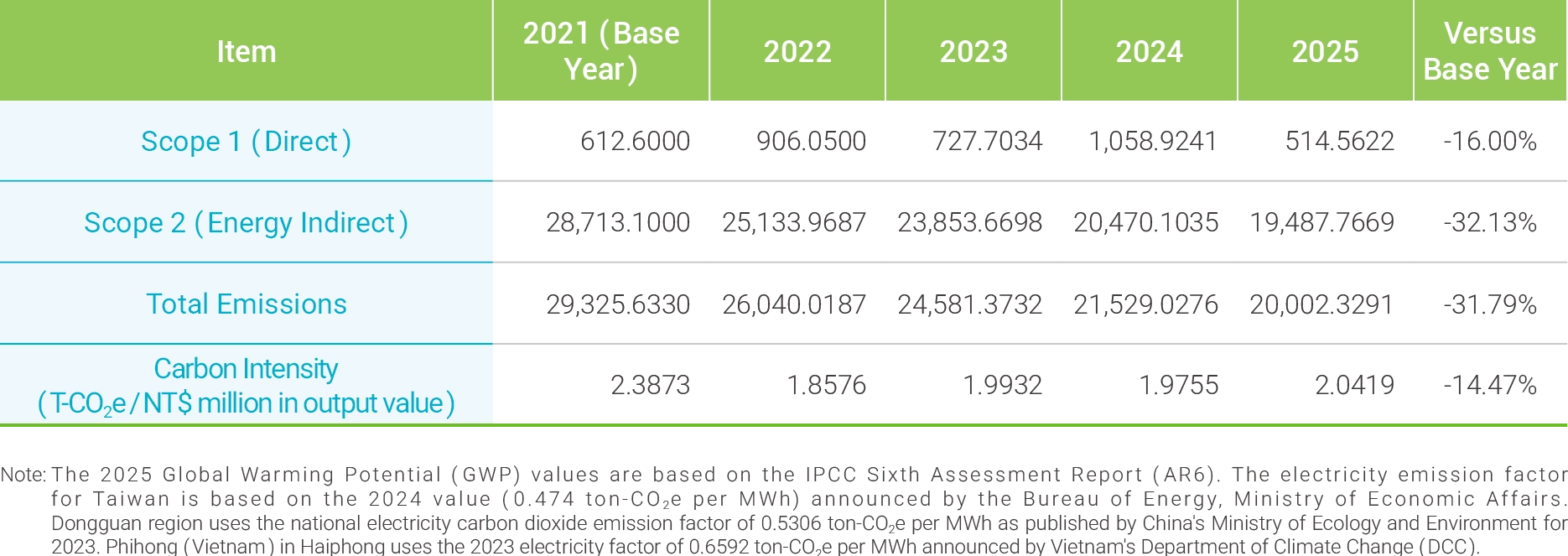
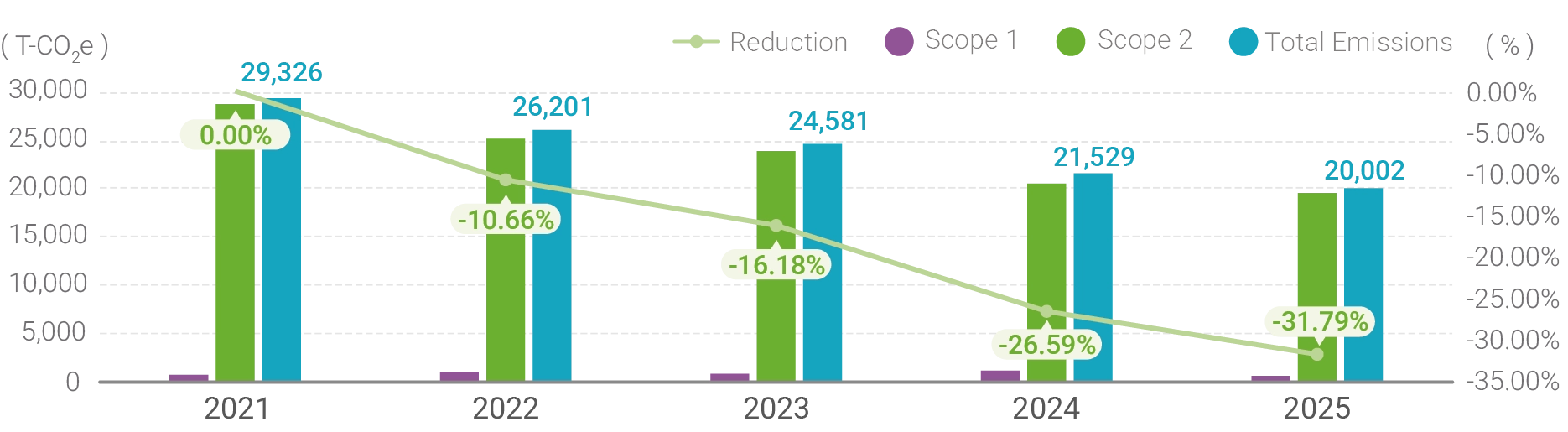
According to the results of Phihong’s Greenhouse Gas Inventories over the years, the primary sources of Scope 1 and Scope 2 emissions
are energy indirect emissions ( Scope 2). Therefore, Phihong’s core reduction strategy focuses on “Energy Management optimization,”
actively supported by “Renewable electricity installation.” In 2025, Phihong’s total direct and energy indirect Greenhouse Gas Emissions
at its global operations amounted to 20,002 metric tons of CO2e. Compared to the previous year, this data shows a 7.1% decrease.
Compared to the 2021 base year, there was a more significant reduction of 31.79%, notably exceeding the SBTi’s set 21% reduction, achieving approximately 75.69% of the target progress. To ensure the implementation of the science-based carbon reduction pathway, Phihong officially introduced an “internal carbon fee mechanism” in 2025. By establishing an internal carbon pricing mechanism, it will effectively drive the planning of energy-saving and carbon reduction projects across domestic and international plants, and is expected to substantially increase the proportion of renewable energy usage,accelerating the achievement of the net-zero transition vision.

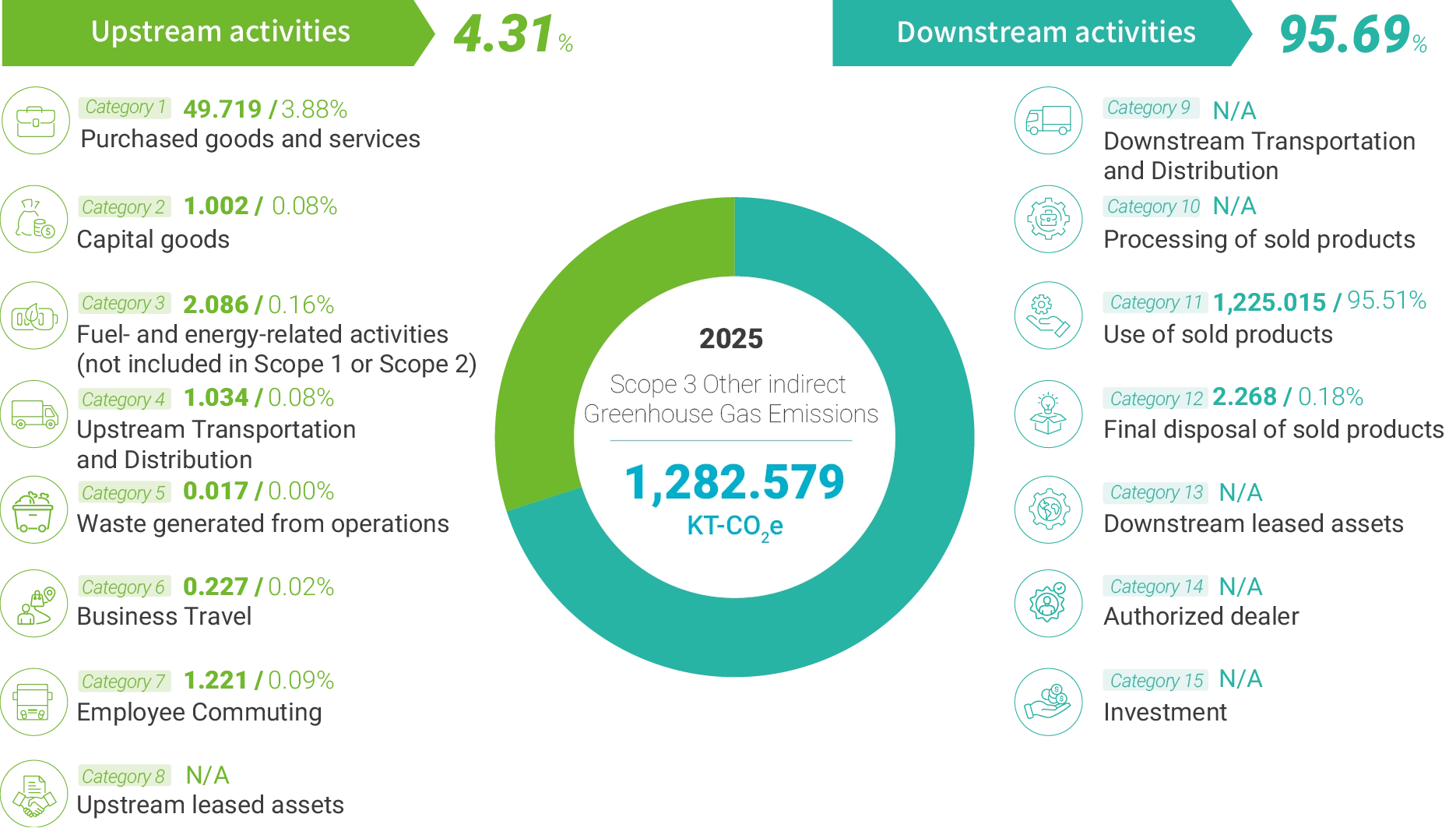
Phihong referenced the Greenhouse Gas Protocol Corporate Value Chain ( Scope 3) Standard methodology, gradually expanding the Scope 3 emission inventory, and completed quantitative assessments for all relevant categories in 2022. Starting in 2025, Phihong has further followed the GHG Protocol guidelines and fully disclosed the inventory results of the 15 Scope 3 categories to enhance the transparency of climate information and strengthen greenhouse gas management and reduction strategy planning in the value chain.
The inventory results over the years indicate that Phihong’s Scope 3 emissions mainly come from C1 “Purchased goods and services” and C11 “Use of sold products.” In 2025, the total emissions for each category within Scope 3 amounted to 1,282.579 kilotons of CO2e, representing a 49.03% reduction compared to the base year 2022’s 2,516.445 kilotons of CO2e. This decrease is mainly due to the decline in product output and sales volume. In terms of the emissions structure, in 2025, C11 “Use of sold products” was the largest source of emissions,accounting for 95.51% of Scope 3 Total Emissions; followed by C1 “Purchased goods and services,” with a proportion of 3.88%. It is displayed that the product use stage remains the primary source of greenhouse gas emissions in Phihong’s value chain and is also a key focus area for future carbon reduction management and promoting low carbon products.
Looking ahead, Phihong will continue to actively reduce greenhouse gas emissions across the value chain by improving product energy efficiency, promoting low-carbon products and materials design, deepening carbon management in the supply chain, and strengthening collaboration with suppliers. The company is gradually moving towards a low-carbon transition and net-zero emissions target.


Phihong continues to advance its energy conservation and carbon reduction blueprint, following the framework of the Energy Management System to set specific and achievable energy-saving targets. Through regular tracking and performance disclosure mechanisms, the Company ensures improvement effectiveness. Starting from 2024, major operational sites have fully introduced energy management systems,building a comprehensive energy monitoring and management framework. From 2025 onwards, in addition to continuing the replacement of equipment, further management-optimized energy-saving measures will be promoted to enhance energy efficiency and achieve carbon reduction.
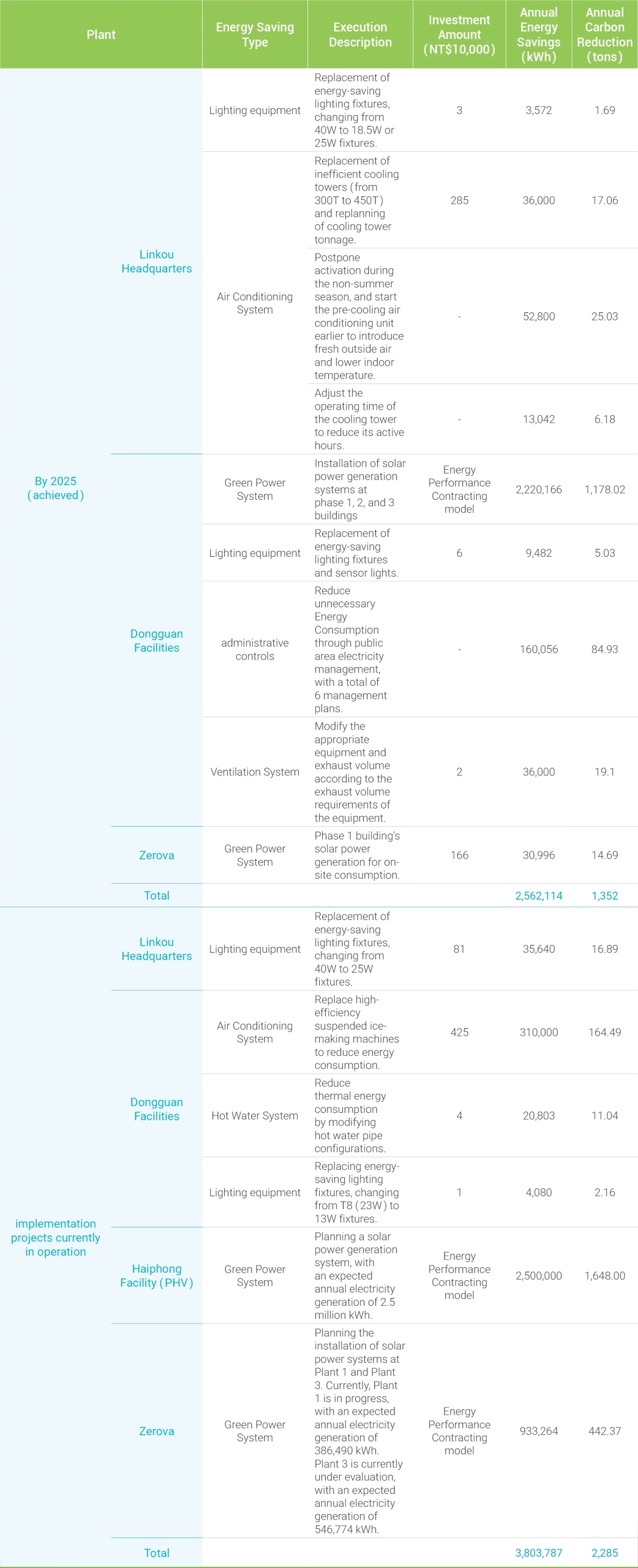
According to the achievement of energy-saving implementation projects at each plant, in 2025, the group’s electricity savings reached 2,562,114 kWh, with a carbon reduction of 1,352 metric tons; in 2026, it is expected to save 3,803,787 kWh, with a carbon reduction of 2,285 metric tons. Starting from 2026, the group will continue to expand its renewable energy initiatives by promoting the installation of solar power systems. Among these, Phihong ( Vietnam) is expected to generate an annual electricity output of 2.5 million kWh, while Zerova (Tainan) will produce approximately 930,000 kWh. This initiative will effectively increase the proportion of green power use, strengthen the momentum for a low-carbon transition, and accelerate the move towards the net-zero emissions target.