Environmental Protection
Phihong deeply recognizes the importance of Earth's resources and sustainable development. The company actively promotes environmental management systems and aligns with global carbon reduction trends. Using 2021 as the baseline year, Phihong aims to achieve a 42% reduction in carbon emissions (Scope 1+2) by 2030, working toward net-zero emissions by 2050.
Low-carbon Design and Quality Commitment
Green Innovation Drives the Future
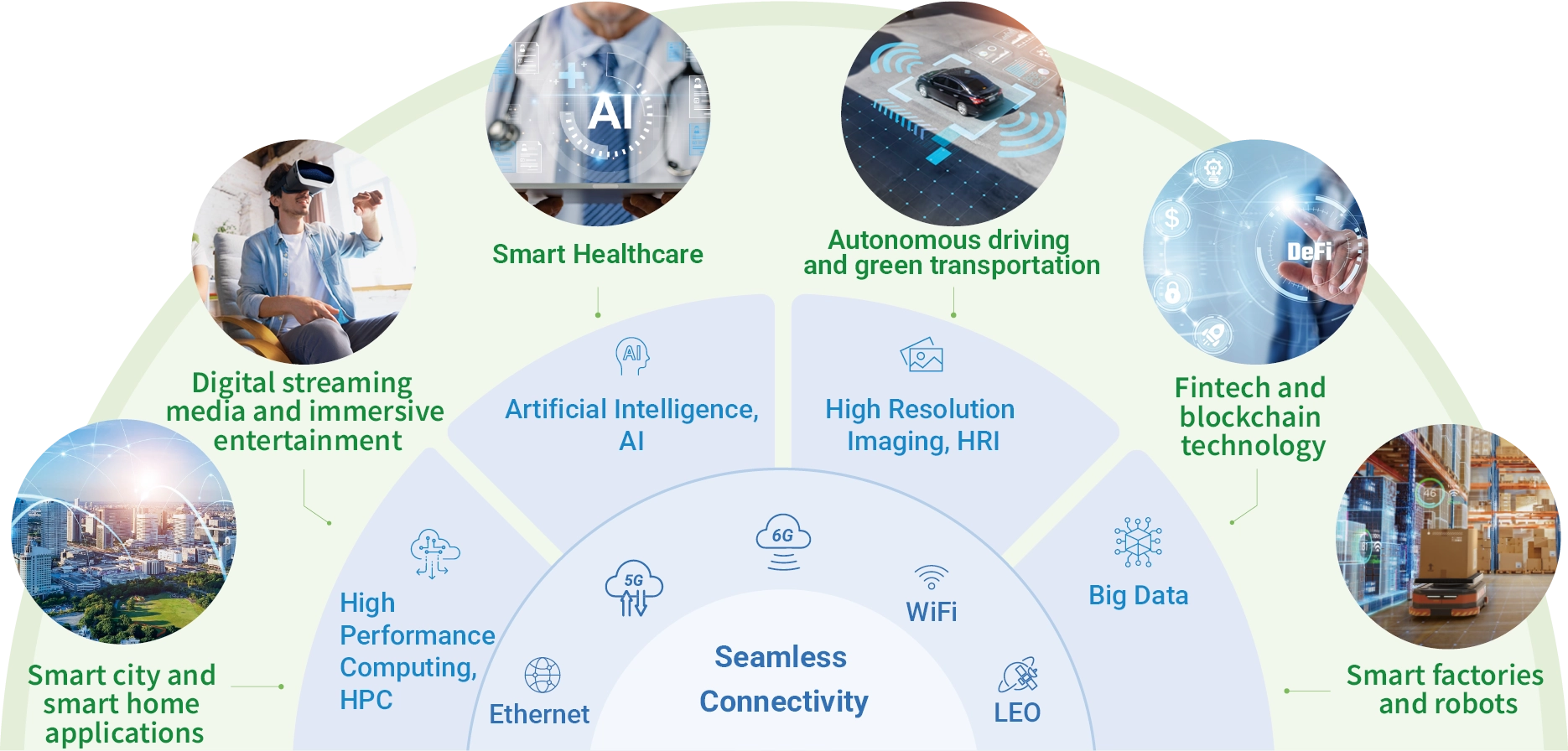
Amidst the global wave towards net-zero carbon reduction, countries are actively promoting green energy and low-carbon transition policies. Phihong Technology Co., Ltd. has a Long-Term commitment to the R&D and manufacturing of high-performance power supplies, focusing on 6 key industry areas, continuously using innovative technology in response to energy transitions and market demands. The subsidiary, Zerova, is dedicated to providing comprehensive customized electric vehicle charging solutions, integrating software and hardware systems to create intelligent charging applications. This approach opens up a new generation of charging models, further accelerating the global adoption of electric vehicles and achieving the goals of low-carbon sustainable development.
Building on its existing power technology, Phihong continues to expand its diverse lineup of high-performance products. The offerings include high-efficiency compact power adapters, smart battery chargers, PD (Power Delivery ) power applications, as well as jobsite radios, home-use medical devices, aesthetic medical equipment, robotics, and electric bicycles ( e-bikes). Through product performance enhancement and
energy-efficient design, balance customer needs with Environmental Sustainability to create a competitive green product ecosystem.
To ensure that integrated solutions can operate stably across brands and regions, establishing unified Standards and strengthening interoperability are crucial foundations. Interoperability refers to the ability of electric vehicles, charging equipment, and back-end systems to seamlessly integrate and operate, affecting not only the system’s long-term stability and scalability but also concerning operational efficiency and investment benefits. For off-grid applications, its importance further extends to energy usage efficiency and equipment lifecycle management, ensuring the system is forward-looking and reducing the risk of asset obsolescence.
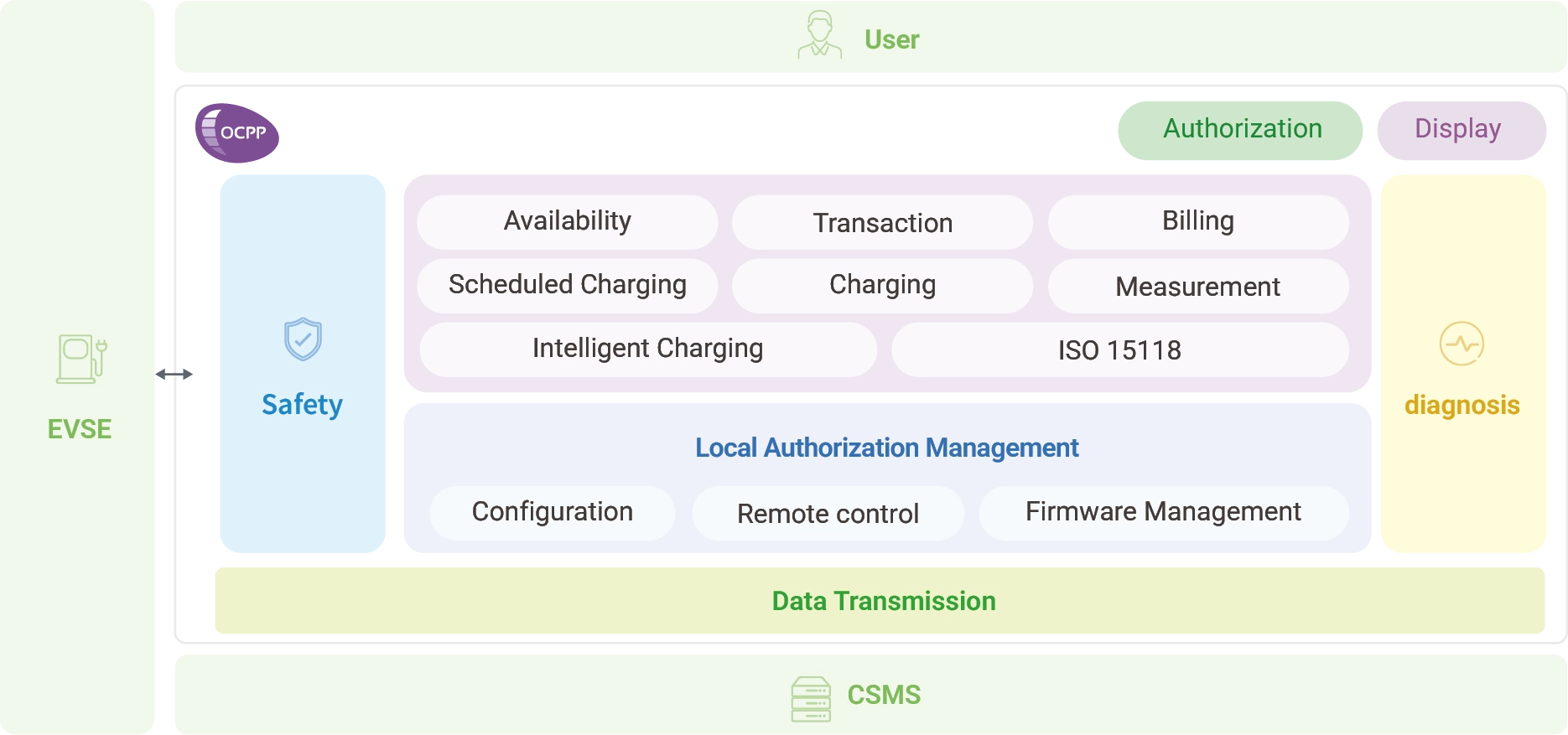
Zerova charging stations adopt OCPP and ISO 15118 international communication standards to ensure high compatibility and scalability.
The mainstream versions of OCPP are 1.6 and 2.0.1. Among them, OCPP 2.0.1 supports V2G (Vehicle-to-Grid ), enabling electric vehicles to feed back electricity and providing more detailed energy scheduling, enhanced communication encryption, and remote management capabilities. This effectively improves operational efficiency and problem-solving capability. ISO 15118 is the core standard for “Plug & Charge” and bidirectional charging, which completes security authentication through digital certificates. It enables direct connection and smart charging management between vehicles and charging stations even in poor communication environments, making it particularly suitable for off-grid or remote areas.
In response to the ESG disclosure trend and in compliance with international standards such as GRI, SASB, and IFRS, the environmental performance transparency and information disclosure consistency of charging infrastructure is strengthened. Through a standardized Management Mechanism, further transform charging operation data into verifiable carbon reduction achievements, serving as the foundation for developing carbon credit mechanisms and creating potential economic benefits.
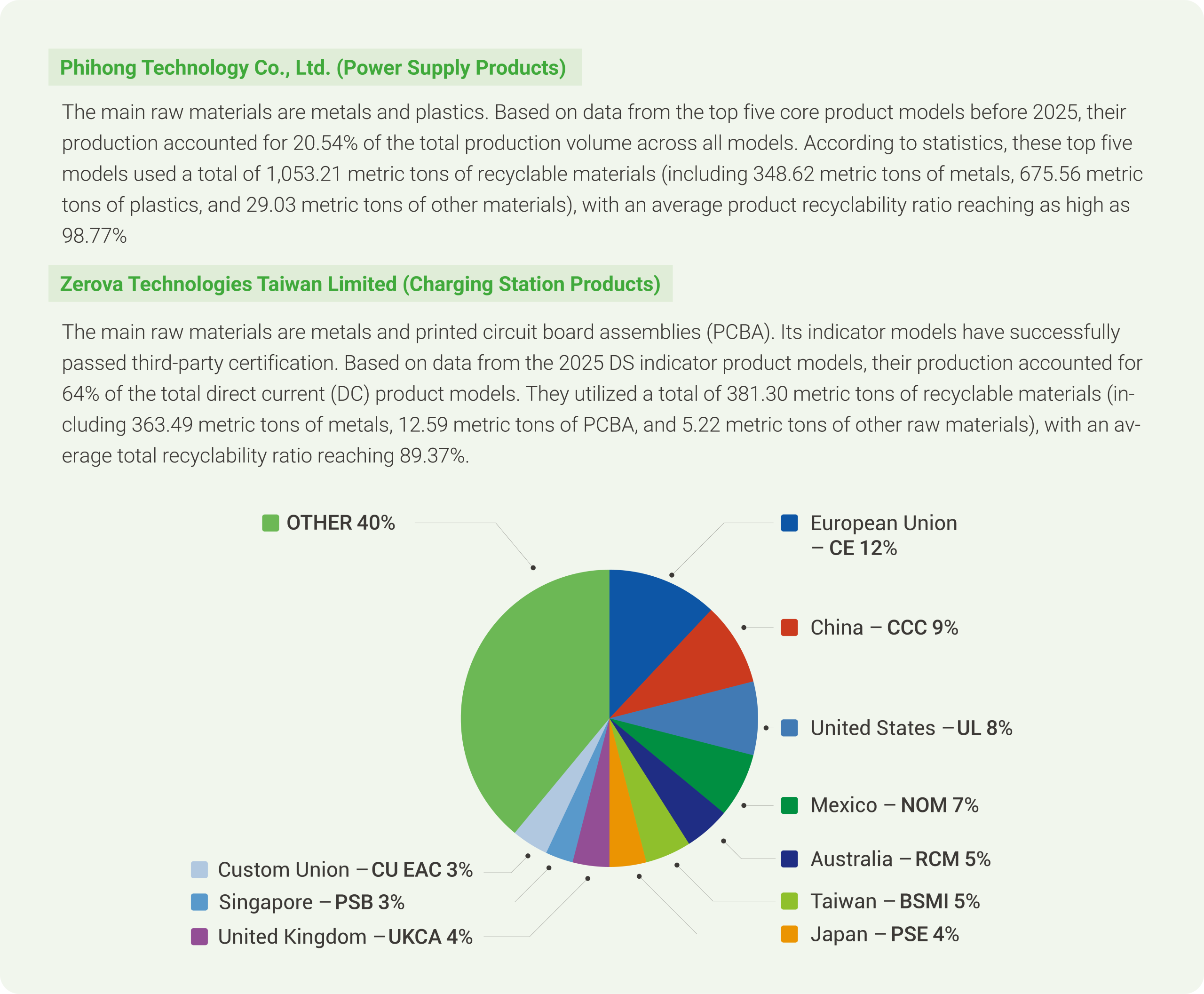
In terms of product safety and compliance, in addition to obtaining VPC certification from Taiwan’s Bureau of Standards, Metrology and Inspection (BSMI), Zerova has also received multiple international certifications, including Energy Star, Intertek, UL, CE, CB, EV Ready, JARI, and TR2. This fully demonstrates the product’s competitive advantages in safety, quality stability, and global market applicability.
Green Charging Integration
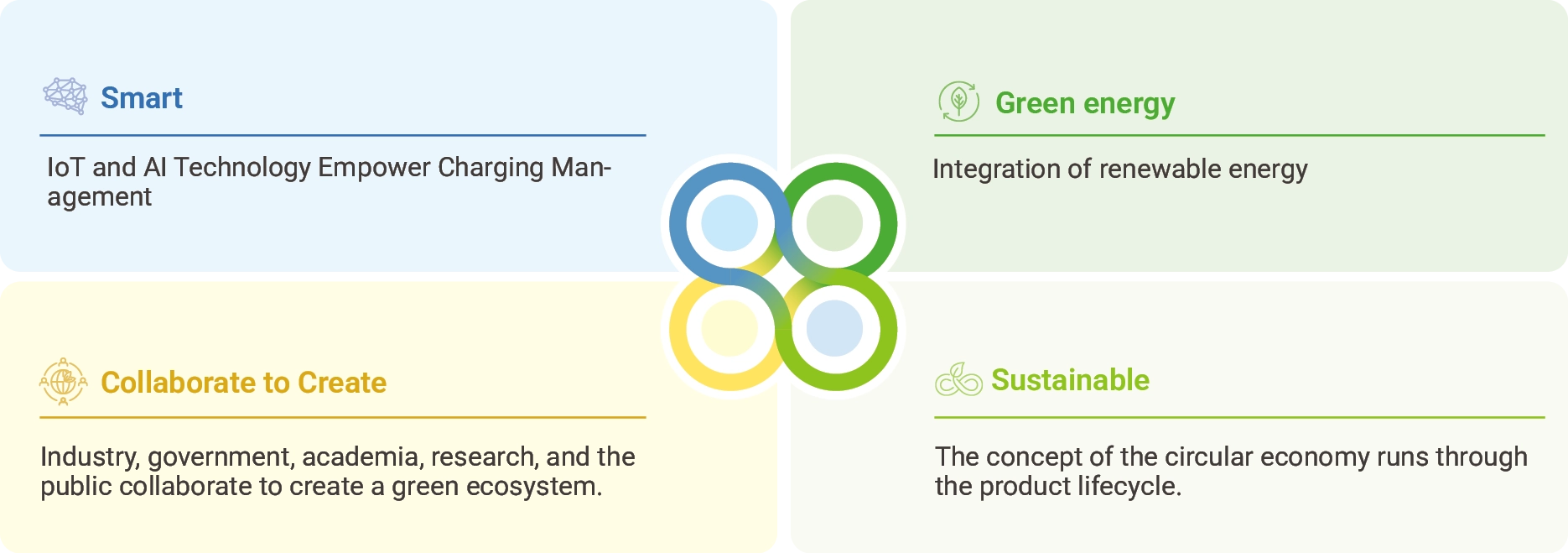
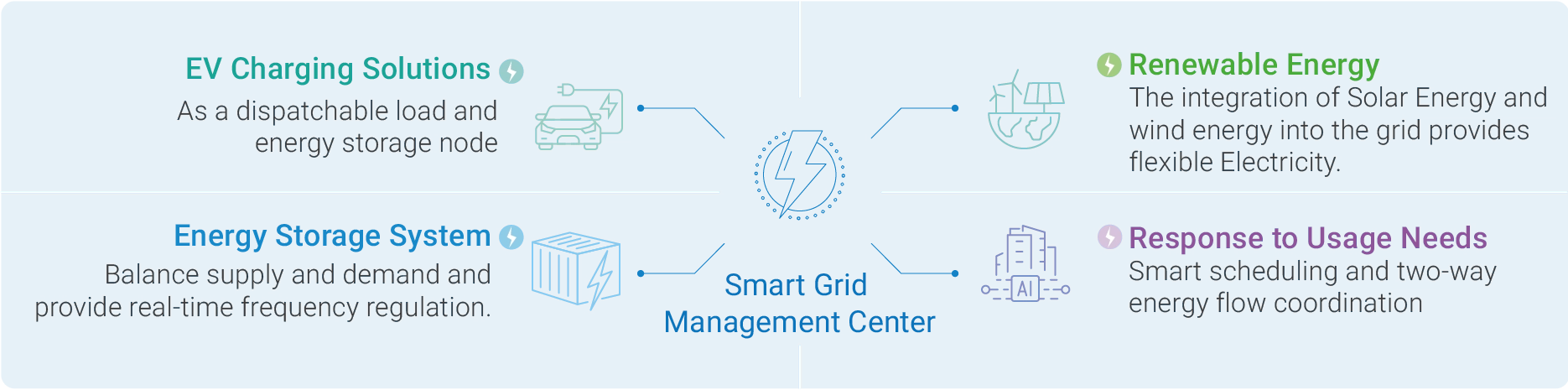
The integration of renewable energy ( such as solar energy and wind energy) is key to the transformation of smart grids and charging infrastructure. At the core of Zerova’s initiative is green energy technology, integrated with AI and energy storage systems to promote the application of renewable energy in charging facilities. Solar energy generation (PV) is directly supplied to charging stations, achieving an “on-site generation and consumption” energy cycle. This model can effectively reduce reliance on the traditional power grid, decrease electricity costs, and significantly lower carbon emissions during the electric vehicle charging process, achieving the target of green transportation.
Through the use of energy storage systems and smart energy management, further enhance energy efficiency by storing excess green energy during the day and releasing it during nighttime or low-generation periods to strengthen power supply stability. The integration of renewable energy and charging facilities is not only an important practice in energy transformation but also a core element in reducing the full lifecycle
carbon footprint of electric vehicles.
Zerova actively develops “PV, energy storage, and charging integration” solutions, integrating solar power (PV), energy storage systems, and charging equipment to build a distributed microgrid architecture. This model can respond to the electrical load pressure brought by the proliferation of electric vehicles and optimize energy scheduling efficiency. The system provides a source of green energy through solar power
generation and regulates electricity using energy storage equipment. It stores energy during times of excess generation and releases it during peak times or when there is no sunlight, effectively achieving “peak shaving and valley filling,” reducing the risk of grid load. In addition, it can also address the issue of insufficient grid capacity in remote Regions, while reducing corporate energy costs and enhancing a Low-carbon
image.
Quality Policy and Service
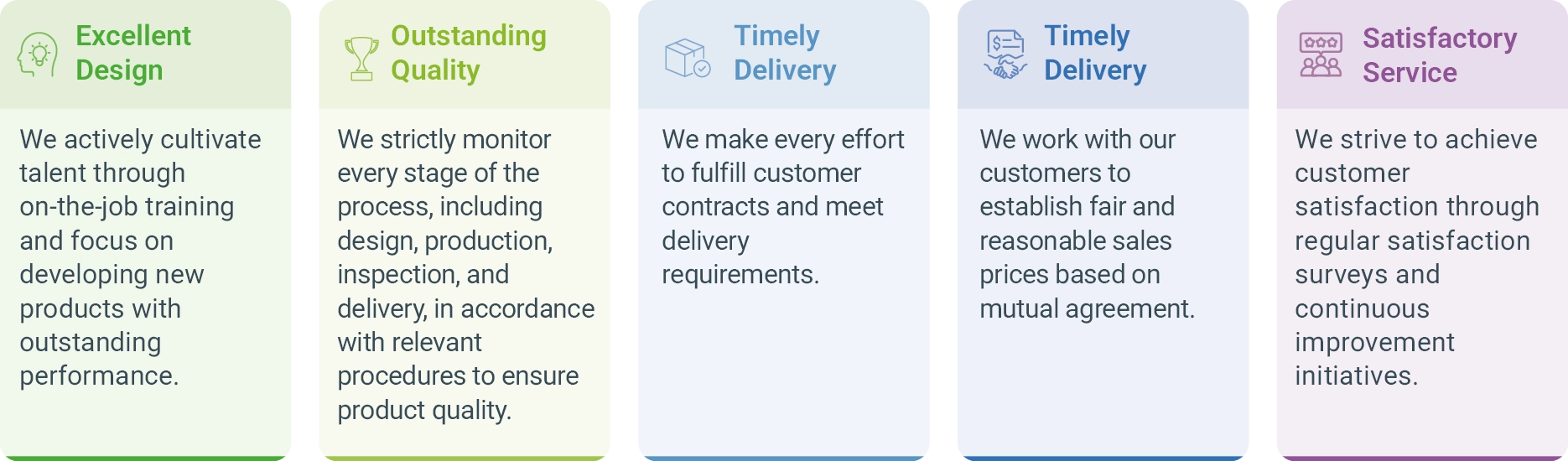
Phihong upholds the philosophy of “Customer First, Quality Foremost, and Service Innovation,” and is committed to the quality policy of “Excellent Design, Outstanding Quality, Timely Delivery, Reasonable Pricing,and Satisfactory Service” to deliver premium products and services.
To protect the health and safety of customers and product users, Phihong implements comprehensive management practices across all stages of the product lifecycle. During the design phase, we incorporate customer requirements, the “Hazardous Substance Free (HSF) Control Standard,” and applicable national regulations. Only qualified materials are used in product development to ensure that all products are free from hazardous substances and meet green product standards with recyclability rates exceeding lifecycle benchmarks. Throughout the product development process, Phihong adopts conservative design specifications, such as applying safety clearances that exceed regulatory requirements, to ensure compliance after mass production. A rigorous project management system governs each phase of the design process, including quality validation and design reviews. Third-party certifications are also obtained before mass production begins. In 2025, Phihong Group recorded zero violations or fines related to health and safety regulations.
Prohibited and Restricted Use of Hazardous Substances
To ensure health and environmental safety, Phihong strictly complies with chemical substance regulations across various countries and customer requirement. We also require our suppliers to limit or prohibit the use of regulate hazardous substances. In line with international environmental standards and customer-specific substance control requirements, we have established comprehensive Green Product Management Standards and Hazardous Substance-Free Technical Standards. In addition, we have established an electronic Green Information Platform that publicly discloses our hazardous substance-related requirements and standards. This information is upload to the supplier management platform, and we regularly organize internal and external education and training.
Our “Hazardous Substance Free (HSF) Control Standard” covers multiple regulatory frameworks, including RoHS, REACH, restrictions on red phosphorus flame retardants, and halogen-free product requirements. Under the EU RoHS Directive 2015/ 863, four additional plasticizers (BBP, DBP, DIBP, DEHP) are now regulated. Suppliers are required to submit test reports on all ten banned RoHS substances when performing part approval and report updates. Regarding the Substances of Very High Concern (SVHC) designated by the European Chemicals Agency (ECHA) under REACH, new substances are added every six months. By the end of 2025, Phihong/Zerova has updated 35 batches of listed substances, covering a total of 251 controlled items. The updates have been promptly reflected on the supplier communication board and
implemented. Recently, we also expanded our list to include 28 specific phthalates, including [Phthalato( 2-)]dioxotrilead. Although Phihong is not formally governed by the IEC 62474 framework, we manage substances in accordance with its requirements. We have ensured that all halogen-free products fully comply with the IEC 62474 standard. In addition, Phihong adopts the WEEE directive as the minimum requirement for product development, ensuring that products can be reused, recycled, or recovered at the end of their life cycle. These efforts not only meet the needs and expectations of customers and end users, but also reflect Phihong’s responsibility and commitment as a global enterprise.

Phihong Technology Co., Ltd. primarily adopts a B2B business model. To actively promote the Circular Economy, the company not only ensures that 100% of its product models meet the recycling thresholds set by the EU WEEE directive but also focuses on promoting source reduction and increasing the use of recycled materials in products to reduce the environmental impact at the end-of-life stage.
Based on the characteristics of our core product lines, the company implements material cycle management. The 2025 core achievements are as follows: