Environment
Phihong deeply recognizes the importance of Earth's resources and sustainable development. The company actively promotes environmental management systems and aligns with global carbon reduction trends. Using 2021 as the baseline year, Phihong aims to achieve a 42% reduction in carbon emissions (Scope 1+2) by 2030, working toward net-zero emissions by 2050.
Environmental Pollution Control
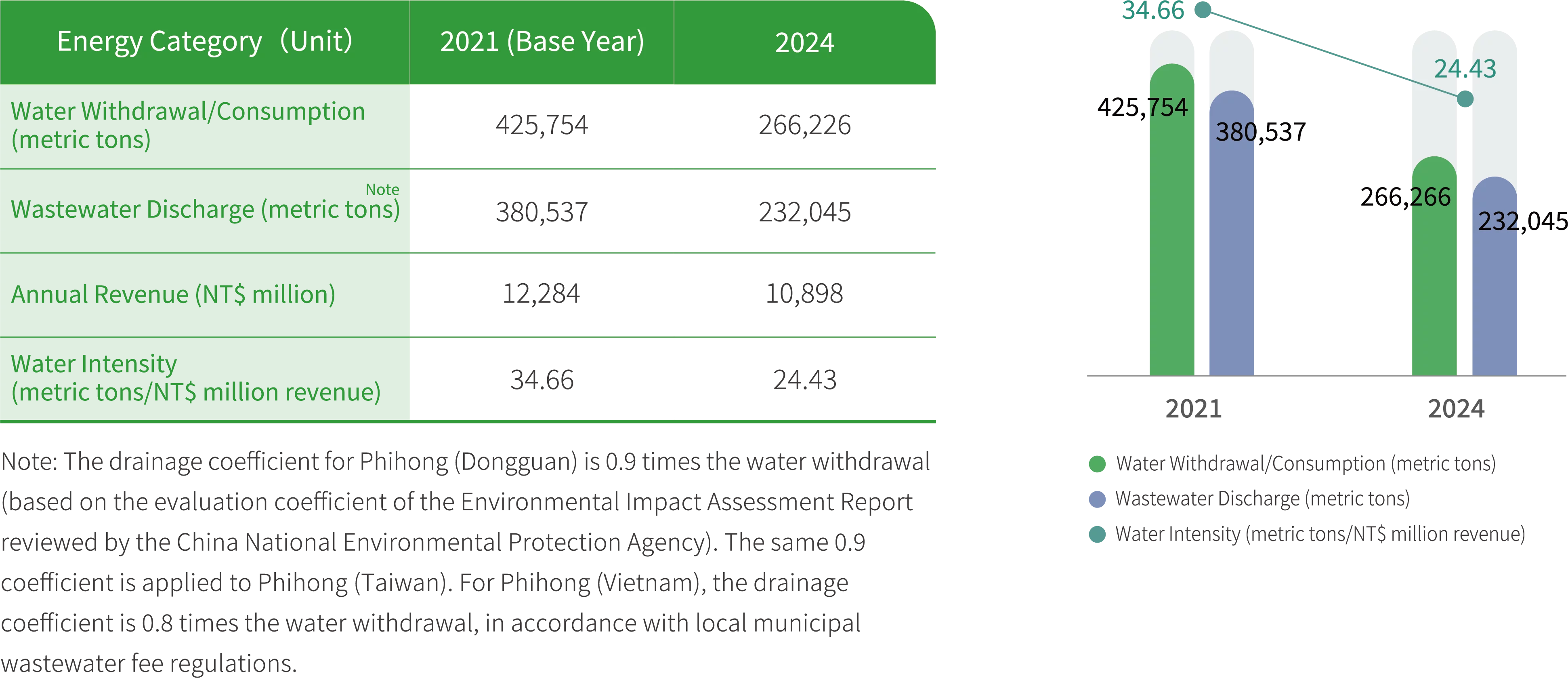
Phihong’s manufacturing sites primarily engage in product assembly processes, which do not involve water-intensive operations and thus do not generate industrial wastewater. Water usage is mostly for domestic purposes, and all facilities within the Group rely on tap water. To reduce water consumption, Zerova’s Phase I and Phase II plants have installed rainwater collection systems for recycling and reuse. Collected rainwater is primarily used for toilet flushing and irrigation, with future plans to utilize it for air conditioning cooling. Phihong (Dongguan) regular maintenance and technical upgrades are conducted on water-intensive equipment such as cooling towers to improve water recycling rates and further reduce overall water consumption. Other sites manage water resources by improving water-saving equipment, such as installing water-saving valves in toilets and using watersaving faucets to promote water conservation practices in daily life. In 2024, Phihong Group’ has achieved a 37.47% reduction in total water consumption and a 29.52% decrease in water intensity compared to the 2021 base year, surpassing its 2025 target of a 20% reduction ahead of schedule.
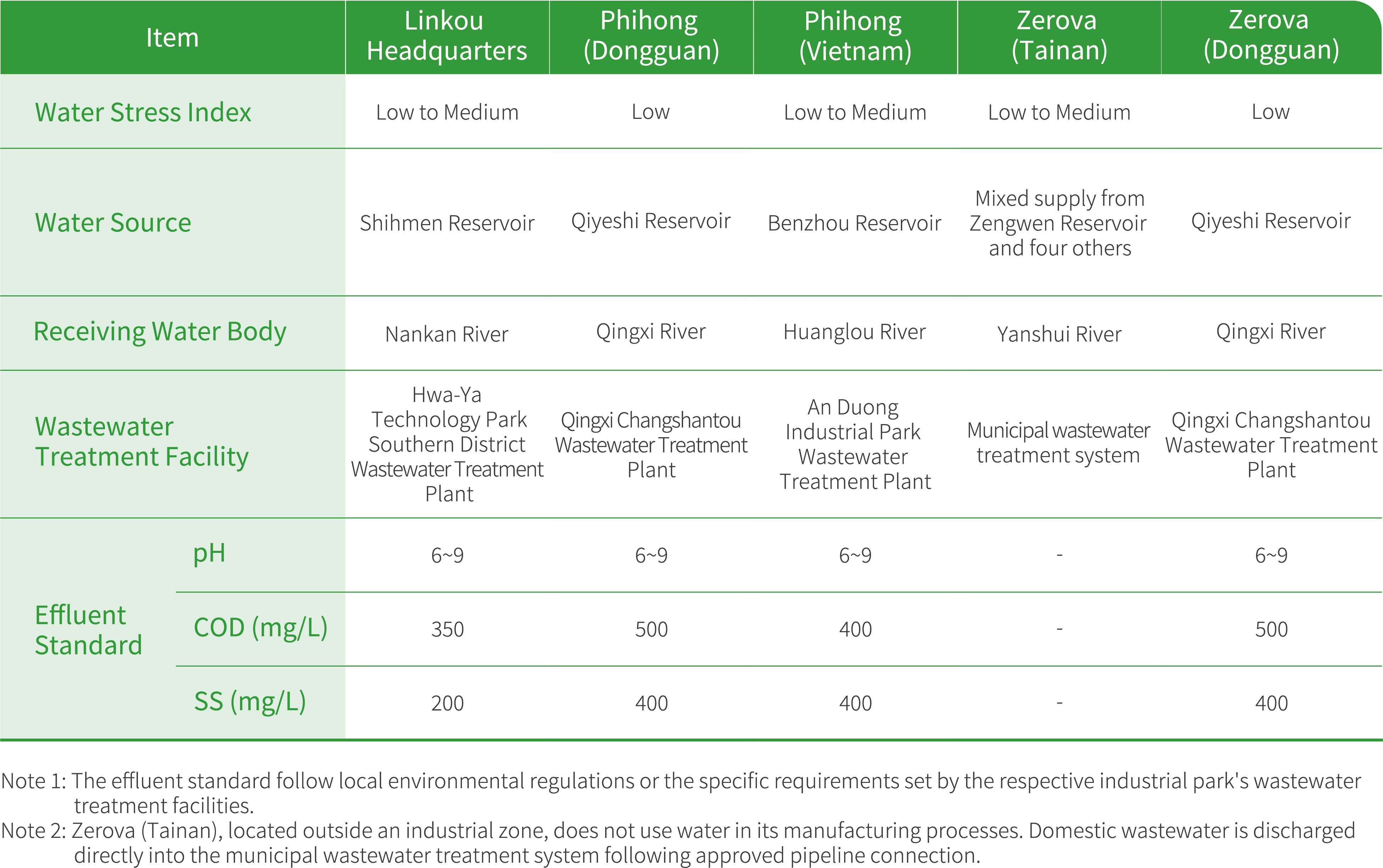
Phihong values global water resources and continuously conducts risk management and plans corresponding measures to enhance operational risk management. The Group adopts the Aqueduct Water Risk Atlas tool from developed by the World Resources Institute (WRI) to assess water stress levels. The results show that except for Dongguan Plant, which is a low-risk area, plants in Taiwan and Haiphong are both low-to-medium risk. All wastewater generated by Phihong’s operations originates solely from daily domestic use. Effluent monitoring equipment is installed at each sites to ensure that discharge quality complies with the wastewater standards of the respective industrial parks or local authorities. In 2024, Phihong recorded no violations of wastewater discharge regulations and was not subject to any penalties. Water withdrawal and discharge activities at all sites had no significant impact on local water resources.
Phihong is committed to source reduction and efficient management of waste, reducing waste generation from the design stage to minimize environmental impact. We conduct ongoing environmental awareness campaigns and training to help employees thoroughly understand the Company’s environmental policies, waste management guidelines, and the importance of resource sustainability. These initiatives also promote source reduction and resource conservation in both production processes and daily operations. In addition, we place great emphasis on monitoring environmental performance and driving continuous improvement. Each year, we engage professional third-party organizations to conduct audits and review performance targets, ensuring continuous enhancement of our environmental management effectiveness and contributing to sustainable development.
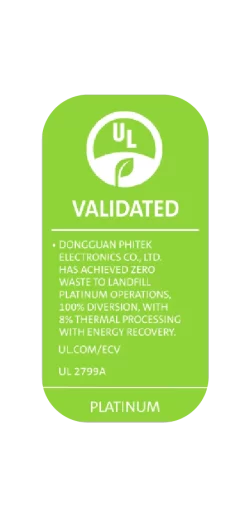
Phihong actively promotes green manufacturing in response to global carbon reduction and net-zero initiatives. Committed to sustainable resource management, the Company aims to establish “zero waste” facilities, with “zero landfill” as a key development direction. Starting from 2022, Phihong initiated its zero waste landfill program at Phihong (Dongguan) and completed a preliminary review in the same year. This initiative prompted a comprehensive review of the entire production process, including raw material selection, product design, and waste minimization strategies, and fully integrated circular economy principles. The project adheres to the UL 2799 Environmental Claim Validation Procedure (ECVP) for Zero Waste to Landfill verification, ensuring that all waste streams are managed in compliance with relevant regulations and are directed toward recycling, reuse, or energy recovery instead of landfilling. Certification is awarded when the waste diversion rate reaches 80% or higher. Hence, Phihong has made waste reduction a top priority. The effectiveness of achieving zero landfill is assessed in accordance with the UL 2799 standard across several dimensions:
On-site: Waste reduction and reuse rates
Off-site: Rates of recycling, composting, anaerobic digestion, conversion to
biofuels, or energy recovery
Non-divertible portion: Proportion of waste sent to landfill or incineration
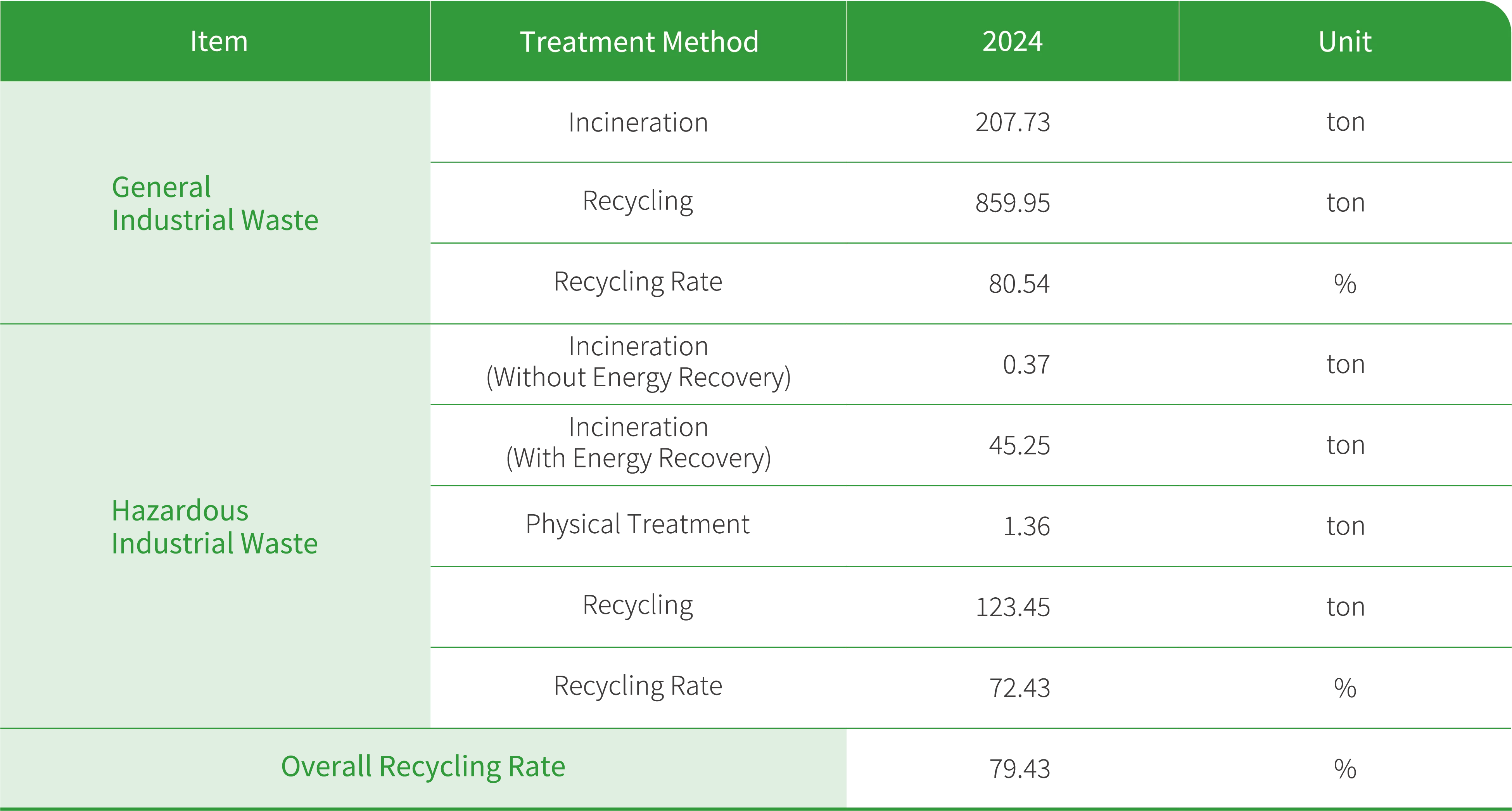
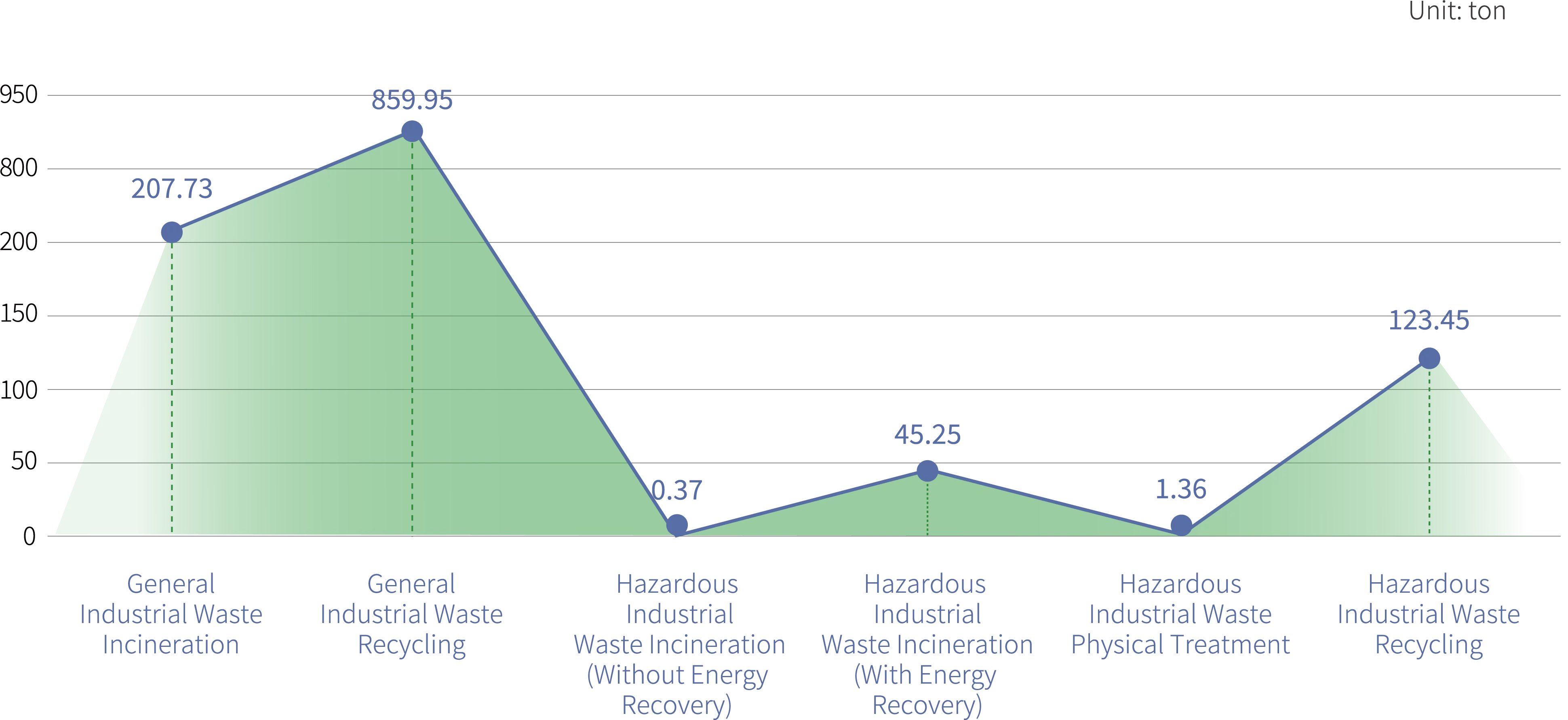
Through ongoing improvement efforts, the Group’s Dongguan plant once again achieved a 100% waste diversion rate in 2024, Including 8% incineration with thermal energy recovery.The site has maintained Platinum-Level certification under the UL 2799 Zero Waste to Landfill program. At the same time, Phihong expanded the certification scope to its Haiphong facility in Vietnam, which has passed UL 2799 verification for two consecutive years. In March 2025, it achieved a 91% waste diversion rate and received Silver-Level certification, demonstrating Phihong’s firm commitment to moving toward zero waste production and contributing to the United Nations Sustainable Development Goals (SDGs).
Phihong actively promotes green manufacturing in response to global carbon reduction and net-zero initiatives. Committed to sustainable resource management, the Company aims to establish “zero waste” facilities, with “zero landfill” as a key development direction. Starting from 2022, Phihong initiated its zero waste landfill program at Phihong (Dongguan) and completed a preliminary review in the same year. This initiative prompted a comprehensive review of the entire production process, including raw material selection, product design, and waste minimization strategies, and fully integrated circular economy principles. The project adheres to the UL 2799 Environmental Claim Validation Procedure (ECVP) for Zero Waste to Landfill verification, ensuring that all waste streams are managed in compliance with relevant regulations and are directed toward recycling, reuse, or energy recovery instead of landfilling. Certification is awarded when the waste diversion rate reaches 80% or higher. Hence, Phihong has made waste reduction a top priority. The effectiveness of achieving zero landfill is assessed in accordance with the UL 2799 standard across several dimensions:
On-site: Waste reduction and reuse rates
Off-site: Rates of recycling, composting, anaerobic digestion, conversion to
biofuels, or energy recovery
Non-divertible portion: Proportion of waste sent to landfill or incineration
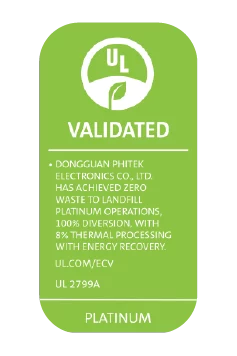
Through ongoing improvement efforts, the Group’s Dongguan plant once again achieved a 100% waste diversion rate in 2024, Including 8% incineration with thermal energy recovery.The site has maintained Platinum-Level certification under the UL 2799 Zero Waste to Landfill program. At the same time, Phihong expanded the certification scope to its Haiphong facility in Vietnam, which has passed UL 2799 verification for two consecutive years. In March 2025, it achieved a 91% waste diversion rate and received Silver-Level certification, demonstrating Phihong’s firm commitment to moving toward zero waste production and contributing to the United Nations Sustainable Development Goals (SDGs).
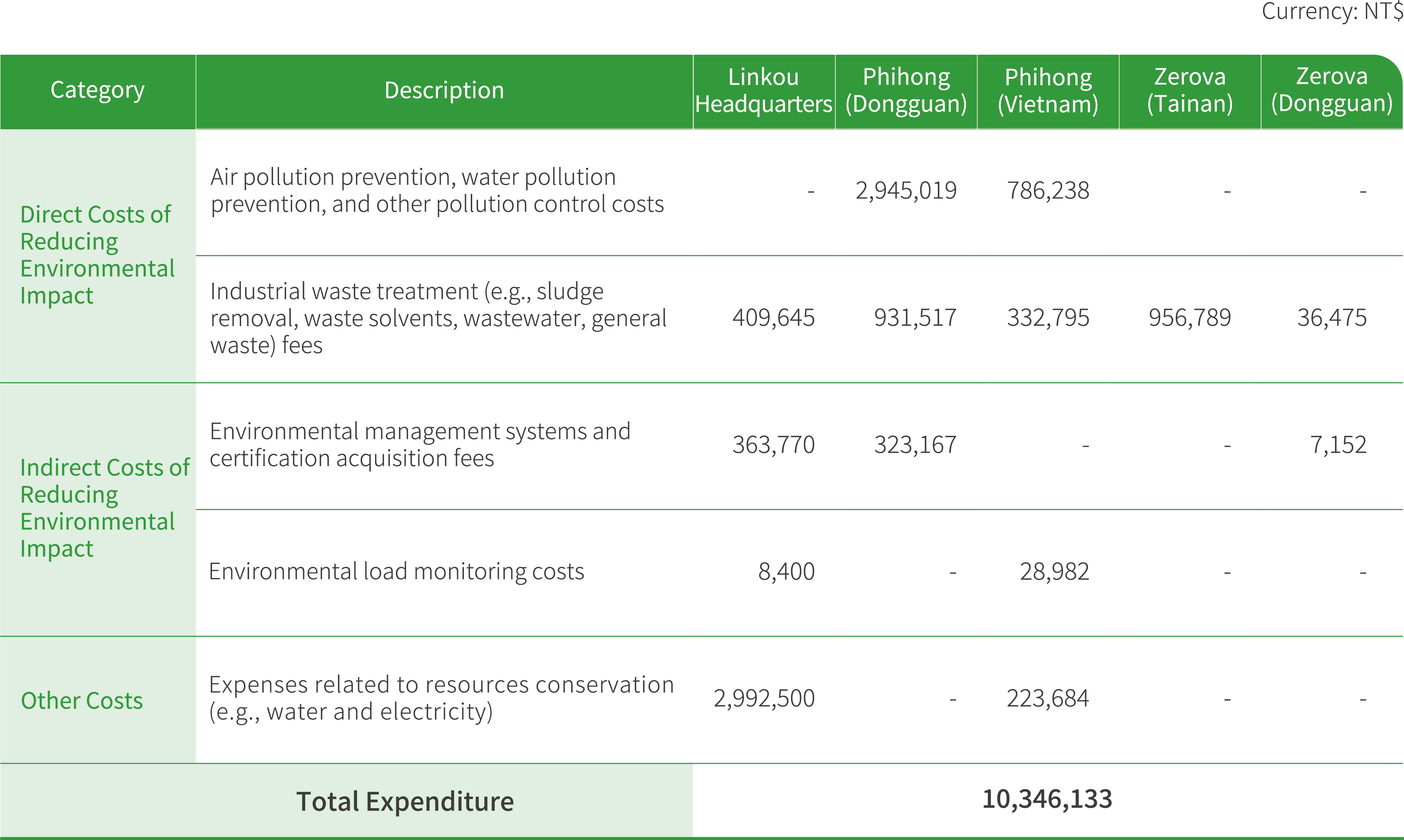
As corporate environmental costs continue to rise, compiling statistics on environmental expenditures and benefits has become an important tool for improving management efficiency. In accordance with environmental accounting standards, environmental economic benefits are calculated based on reductions in energy and water consumption, as well as decreased waste generation achieved through the implementation of environmental protection initiatives. These reductions are then translated into estimated cost savings. In addition, revenues generated from waste recycling and reuse are also taken into account. This report presents the environmental benefits, including tangible monetary income such as proceeds from waste recycling and savings in operational costs resulting from environmental measures. Detailed statistics on the environmental expenditures and benefits statistics for Phihong’s various plants are provided in the adjacent table.