Stakeholder Communication
Material Topic Identification
Material Topic Identification Process and Results
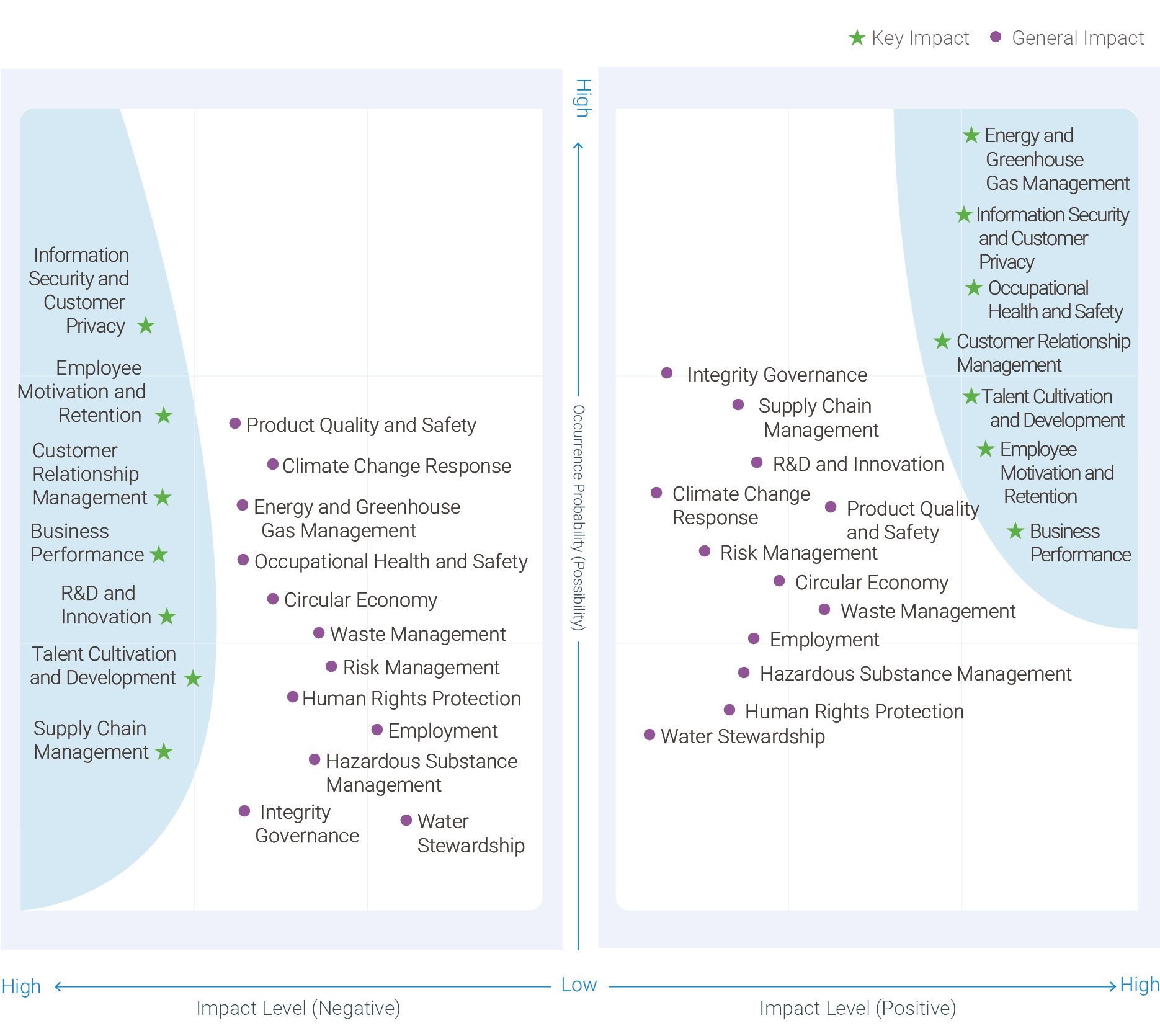
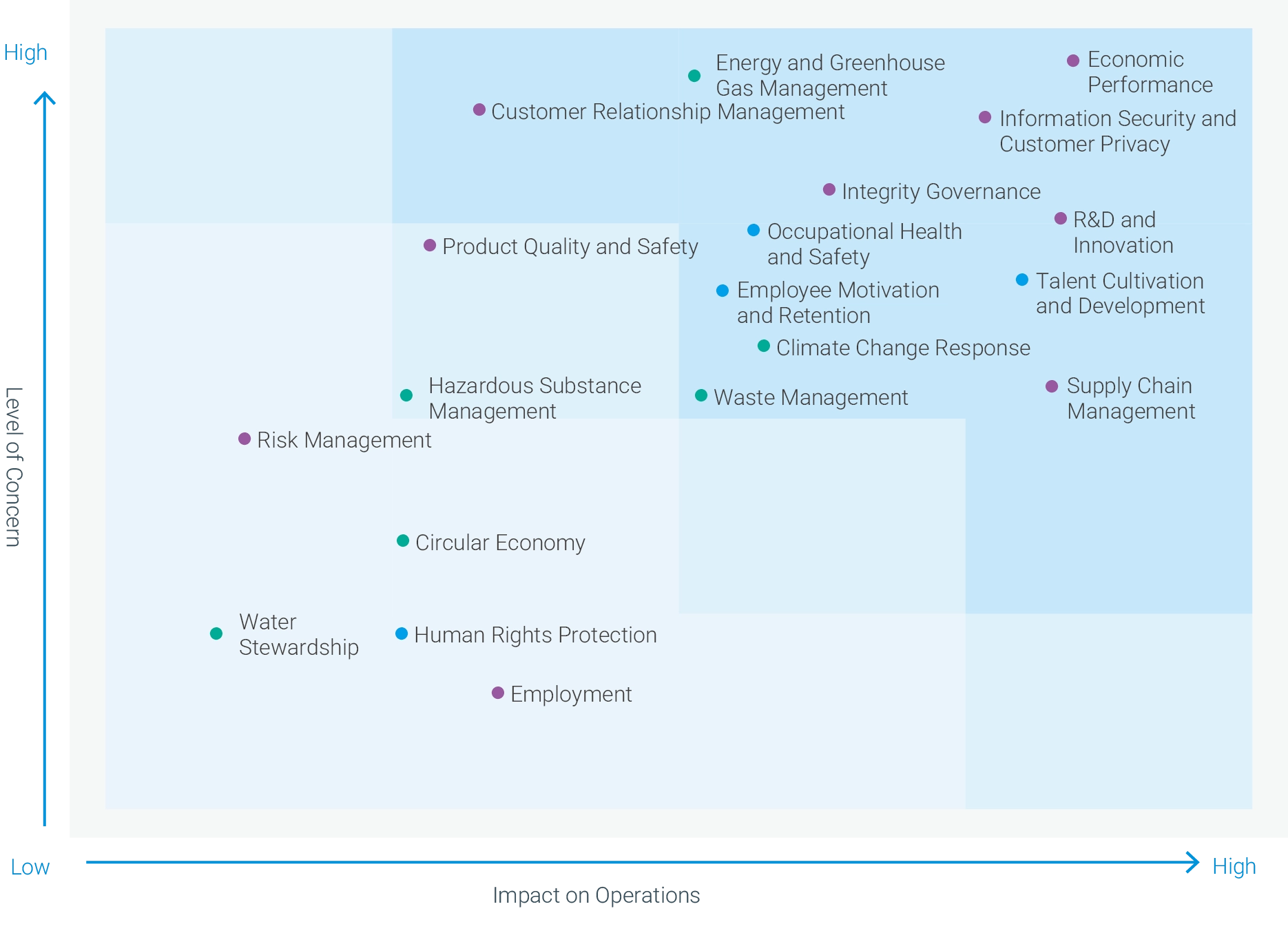
Phihong actively aligns with international indicators by referencing International Sustainability Standards and Frameworks (SASB, TCFD, CDP) and the United Nations Sustainable Development Goals (SDGs). Combining industry trends and the outcomes of stakeholder communications, Phihong has refined 19 core sustainability topics. To accurately define development priorities, we follow the GRI 3 Material Topic standards, with the senior executive team leading the Double Materiality assessment. Comprehensively evaluate the positive and negative impact level and occurrence probability of each topic on the economy, environment, human rights, and business operations. Through cross-analysis using the “Material Topic Matrix” and integrating stakeholder focus areas, the management approach is ultimately reviewed by the Sustainable Development Committee and submitted to the Board of Directors for approval and implementation.
2025 Phihong Positive / Negative Impact Matrix
Level of Concern and Degree of Impact Analysis
List of material topics for 2025
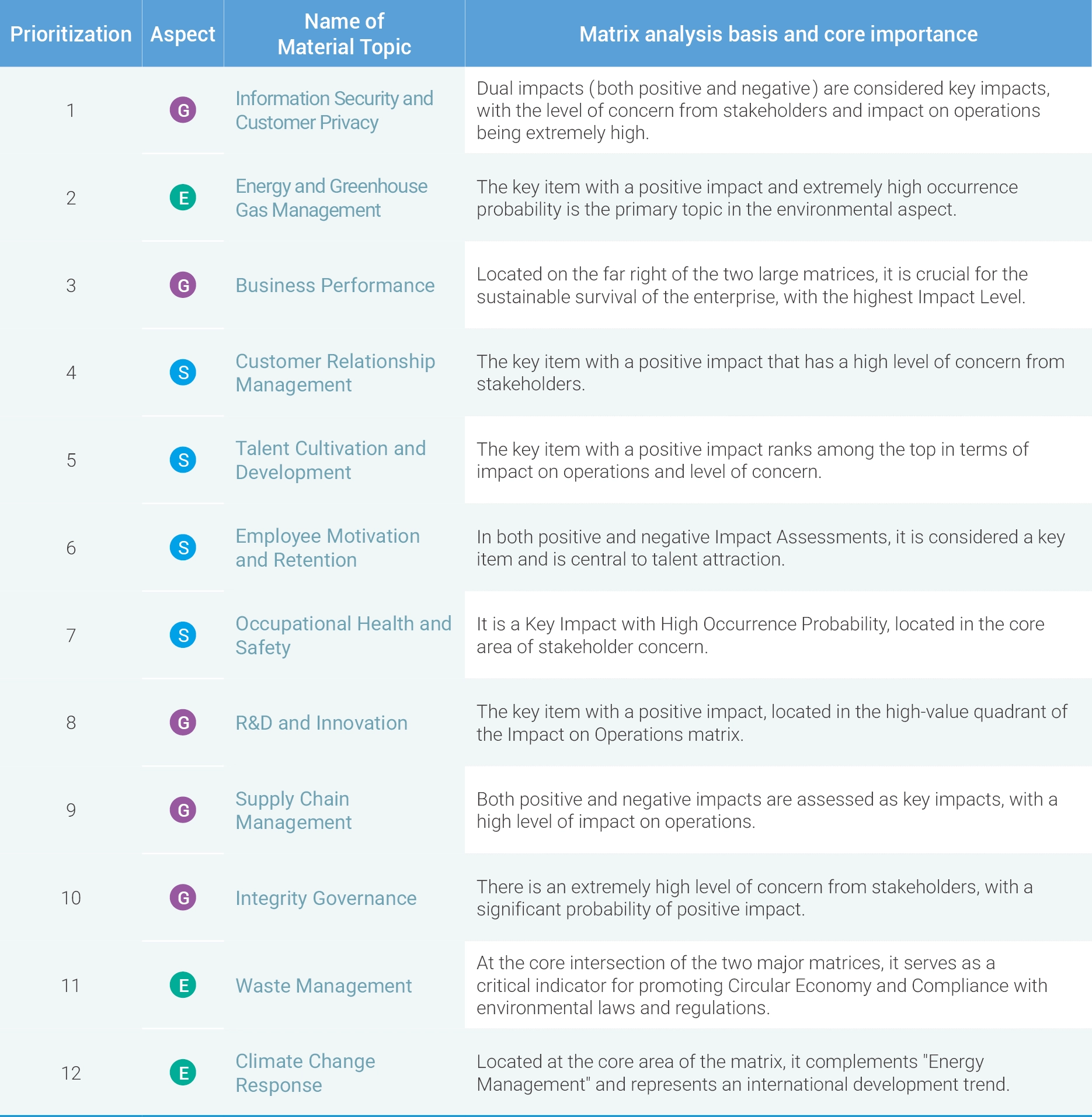
2025 Material Topic Overview
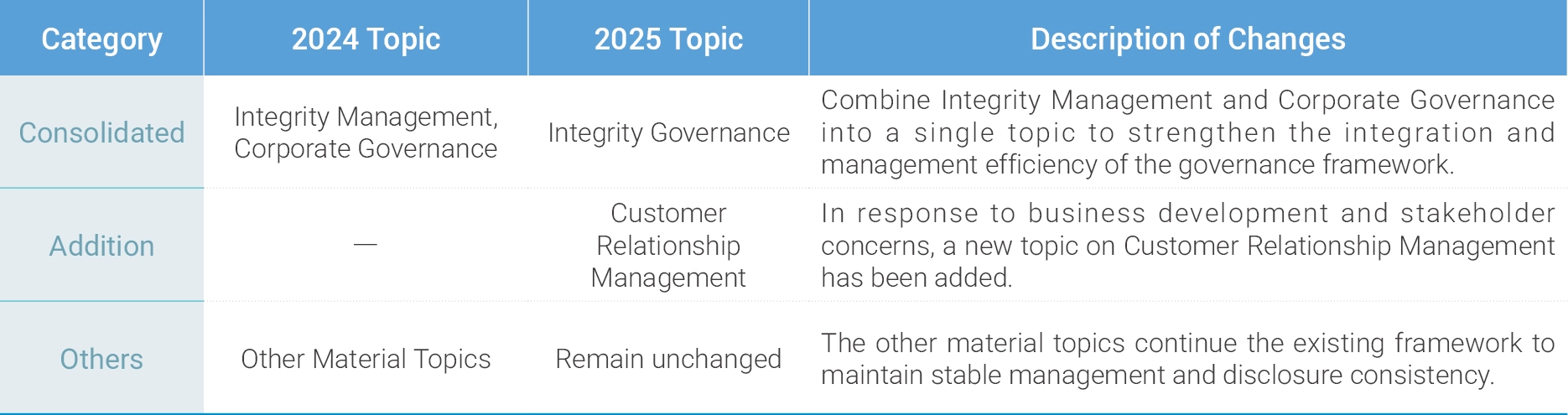
In 2025, Phihong identified 12 Material Topics. Compared to 2024, “Integrity Management” and “Corporate Governance” have been consolidated into “Integrity Governance,” and a new topic on “Customer Relationship Management” has been added. For the aforementioned 12 topics, the impact boundaries within and outside the organization have been clearly defined and are aligned with specific GRI indicators, serving as the core content of this report to concretely demonstrate Phihong’s response strategies and promotion performance. In addition, all Material Topics are integrated into the “Three Lines of Defense for Corporate Risk Management” mechanism, where the Executing Units, Risk Management Unit, and Audit Office collaborate, counterbalance, and supervise each other to ensure effective implementation of the relevant management processes and continuously enhance overall risk control capabilities.